Broholmer


MENTALITET
Rolig, godmodig og omgængelig. Den er vagtsom og kan optræde med stor selvsikkerhed, men er i almindelighed venlig også over for fremmede. Racen er en tålmodig og børneglad selskabs- og familiehund, som gerne tilpasser sig, dog skal den socialiseres tidligt og have en fornuftig opdragelse på grund af racens størrelse.
Behøver et godt socialt liv i tæt kontakt med familien. Den store, tunge hund motioneres moderat som ung, og den har ikke godt af at gå op og ned ad mange trapper, før den er udvokset.
AKTIVITETSNIVEAU OG HANDLERADIUS
Racen er robust og glad for at være ude. Den bevæger sig gerne, men oftest i et lidt sindigt tempo. Den er nært knyttet til sit område og strejfer ikke unødigt omkring. Den reagerer godt på anvisninger og holder forholdsvis tæt kontakt til sin ejer.
PELS OG PLEJE
Pelsen er kort og tilliggende med kraftig underuld. Den fælder noget forår og efterår, og den bør derfor jævnligt børstes igennem. Racens rekonstruktion er ikke helt afsluttet.
TIPS OG TRICKS TIL INDLÆRING OG HÅNDTERING
Et fastlagt lederskab er vigtigt på grund af hundens størrelse, ikke på grund af temperamentet. Den er samarbejdsvillig og kan lære alt, når metoden bygger på lyst, venlighed og tillid. Træn varieret i korte sekvenser og beløn rigeligt.
Hanner ca. 75 cm. Tæver ca. 70 cm.
Gul med sort maske, rødgylden eller sort, gerne med hvidt på bryst, poter og halespids.
OPRINDELSE
En dansk nationalrace, kendt som type siden middelalderen, hvor den bl.a. deltog i jagt på vildsvin. Senere blev den mest brugt som vagthund på slotte og større gårde. Sidst i 1800-tallet blev racen renavlet af grev Sehested til Broholm, hvorfra den har sit navn. Efter anden verdenskrig uddøde den næsten, men midt i 1970'erne begyndte interesserede hundefolk i samarbejde med Dansk Kennel Klub at genopbygge racen på basis af nogle få eksemplarer og ved hjælp af andre lignende racer.
INTERNATIONALT RACENAVN
Broholmer HVALPE TIL SALG
VISER 0 ANNONCER
Herunder finder du en oversigt over aktuelle kuld af racen Broholmer, der pt. er til salg.
Husk også at læse guiden til, hvad du skal være opmærksom på, inden du køber hund.
Broholmer

The Broholmer is a large to giant sized purebred from Denmark also called the Danish Mastiff, Danish Broholmer, Gammel Dansk Hund, Old Danish Dog and Dog of Frederick VII. It is a type of Molasser and while it has recognition from the Federation Cynologique Internationale and the Danish Kennel Club it is not recognized yet by the AKC, though it is a member of the Foundation Stock. It has mostly been a guard dog and watchdog over the years and while it is formidable looking it is actually calm and good tempered when raised well making it a good family dog or companion.
The Broholmer's Beginnings
The Broholmer is a Danish dog that has been around in some form or other since the Middle Ages where it was used for hunting. As its ancestors come from a time when records were not kept by breeders, the exact mix of the dog is not known. It was bred though to be strong and powerful for the hunt to handle large prey like boar,wolf and deer, and to have strong protective instincts making it a great guard dog. In its early days it was one of the most popular Danish dog breeds and it was called Gammel Dansk Hund which means Old Danish Dog.
Eventually the dog became closely linked with the royalty of Denmark, in the 1500s King Frederick II had a painting of his Broholmer all the way up to portraits that show the King Frederick VII and Countess Danner had some which explains one of its other names. It was a popular dog with the wealthy who also kept it as a guard dog and would exchange it as a gift with other European nobles. By the mid 1800s the dog has been bred to be calmer and less fierce but the expense of its upkeep meant numbers were dropping. A Danish nobleman Niels Frederick Sehested, a nobleman who bred many Broholmers at his castle Broholm and persuaded other breeders to get involved in saving the breed. That is where the Broholmer name comes from.
In 1886 the Dansk Kennel Club recognized the breed and the first standard was drawn up. However in the 19th century the Industrial Revolution had a great impact on the need for the Broholmer at the same time the nobility lost land. Less dogs were kept and numbers dropped. It was starting to have some recovery but then world war I broke out and the depression after meant large breeds like this were hard to keep. Then in world war II it was occupied by the Nazis and the breed became even more scarce either by the fighting or from abandonment. By the end of the war the breed really was facing extinction.

New Lease on Life
The Broholmer may have disappeared completely if not for the work of a group of people in the 1970s who called themselves 'The Society for Reconstruction of the Broholmer Breed', working with the Danish Kennel Club. The scoured Denmark looking for dogs to breed but found only one pedigree Broholmer and it was too old. So then they looked for dogs close to the standards of a purebred and found a small few. But it was enough to start working on a revival. In 1982 it was recognized by the FCI and currently it is estimated there are around 800 dogs, most of which are in Denmark though there are a small number in the UK and even less in the US. Work continues to be done on increasing its numbers and when there are enough numbers in the US the AKC will likely give it official recognition.
The Dog You See Today
The Broholmer is a large to giant dog weighing 80 to 180 pounds and standing 22 to 30 inches tall. It has a close resemblance to other Mastiff types but is not as bulky and is smaller than most of them. Its body is rectangular shaped and it has a deep and broad chest and a strong neck that has some loose skin. It is more athletic looking than most Mastiffs, it has thick legs and a low set long tail it usually holds low. Its coat is smooth, short and harsh and colors include yellow, light brown, black and some white markings. Some have a black mask.
The dog's head is large with a flat and broad skull, it does not have short muzzle in fact its muzzle is the same length as its skull and the top of it is parallel to the top of its head. It has pendulous lips but not too loose and the nose is black and large. Its ears drop down and hang close to the cheeks and are medium sized. Its eyes are round not overly large and colors can be dark to light amber.
The Inner Broholmer
Temperament
The Broholmer needs confident and experienced owners who know how to correctly raise them. In the right home it can be calm, friendly, good natured, and loyal. This stoic dog does have protective instincts and is watchful and alert. This means it is a good watchdog that will bark to let you know there is an intruder, and it is likely to act to defend you and its home also. It gets on well with others so can fit in to a family home, but can also be a good companion for active single owners or couples. While wary initially with strangers it is not people aggressive unless there is a threat.
This is a confident and dominant dog so needs owners who are clear about being the pack leader, otherwise it will act like it is the boss, can be destructive, hard to live with and loud. Otherwise its barking should just be occasional but it is a loud and deep bark. It does form very close bonds with its family and will be devoted to you. It wants to be around you all the time and does not like being left alone. It can even suffer from separation anxiety if you leave it alone for long periods. It needs owners who are in more than out.
Living with a Broholmer
What will training look like?
Training the Broholmer takes a very firm, confident and consistent approach. Make it clear you are the pack leader and that rules you set are not be bent. Dogs are actually happier when those lines are clear. It is fairly intelligent and capable of learning just be patient and use positive techniques. Use treats to motivate for example, praise it and encourage it. Coming from a history if being used to making its own decisions and left alone to guard it can have an independent side to it. Make sure you start socialization and training early, the earlier the better in fact. Introduce it to different sounds, people, animals, places and situations so it learns how to adapt to them and what appropriate responses look like.

How active is the Broholmer?
This dog is really just moderately active perhaps a little more, but because it is so big that translates to a lot of activity still, and it needs owners happy to be active. It is more athletic than most Mastiffs and should get at least one long walk a day, some play, and some opportunity for exploration somewhere safe. As with any large breed take care when it is still growing not to overexercise or let it jump around on hard surfaces as its bones are more prone to damage and injury. It is not an apartment dog, it needs space and it needs a yard. Expect to offer it about 45 minutes a day of physical activity and also make sure it has mental stimulation.
Caring for the Broholmer
Grooming needs
While the coat of this dog is easy to brush and wipe down to clean it size means it is still a task that takes some time and commitment. It sheds a moderate amount but then does have heavy seasonal shedding so usually brush it once or twice a week, but then daily when its needed. Only bathe as needed, in between baths you can wipe it down with a damp cloth. Only use a dog shampoo when it is bath time to avoid damaging the oils in its skin. It will not need professional grooming unless you opt to use one just because bath time is tough with its size!
Other needs include cutting its nails using a dog nail clipper when they get too long. Cut carefully though so you do not cut into the lower section of the nail that has blood vessels and nerves, so will hurt and bleed. Check its ears once a week for infection signs like a bad odor and irritation and clean them. Just wipe the areas you can reach, do not put anything into the ear like a cotton bud, that could do real damage and cause a lot of pain. Also brush its teeth at least three times a week using a dog toothpaste and brush.
Feeding Time
The Broholmer will eat somewhere between 3¾ cups to 9 cups of a good quality dry dog food a day, split into at least two meals to avoid problems with bloat. How much exactly can vary depending on its size, health, age, level of activity and metabolism. Make sure it has access to water that is changed often.
How is the Broholmer with children and other animals?
These dogs with proper socialization and training are very good with children, being gentle, affectionate, protective and loving. However toddlers should be supervised as they can get knocked over accidentally. Make sure you also teach the children how to touch and play nicely and that the dog is not for riding! With other dogs it should also be fine with socialization though male dogs that have not be fixed can have territorial and dominance issues so they are best in homes where they are the only dog or at least the only male. Some Broholmers have more small animal prey instincts than others, but in general socialization and being raised with them means they can get along with other pets. If it is not socialized though it is likely to try to attack and chase them.
What Might Go Wrong?
Health Concerns
Broholmers live for about 7 to 11 years and are fairly healthy in general though a few issues can include bone problems, joint dysplasia, patellar luxation, eye problems, heart problems, back problems and arthritis.
Biting Statistics
Reports that cover dogs attacking people and doing bodily harm in the last 35 years in North American do not mention the Broholmer. It is not a people aggressive dog but is is large and protective so would respond to any genuine threat with force. Early socialization and training are essential to make sure dogs know appropriate responses. Also important are to make sure it gets enough stimulation and exercise, attention, a good diet and affection. While no dog is ever 100% safe, there is always a small risk with any type or size of dog, but these duties of a responsible owner can help minimize them.
Your Pup’s Price Tag
The Broholmer puppy will cost about $1600 from a decent breeder but can cost a lot more than that especially since there are very few breeders outside of Denmark! Chances of finding a dog like this in a local rescue or shelters are very slim, but if your new companion can be a mixed breed consider checking them out anyway. Adoption tends to be around $50 to $400 and some medical needs are taken care of for you. Avoid using backyard breeders or puppy mills or even pet stores.
When you have your puppy there will be some things you need to get for it, a collar and leash, crate, bowls, bedding and so on that will have an initial cost of about $200. There are also some medical concerns to be dealt with. While the breeder or shelter may have taken care of some you still need to take it to a vet as soon as you come home with it. You will pay about $290 for things like spaying or neutering, micro chipping, deworming, vaccinations, blood tests and a physical examination.
Annual costs are another factor, pets are our responsibility to look after and takes a certain financial commitment. Basic medical needs like shots, flea and tick prevention, check ups and pet insurance come to about $485 a year. A good quality dry dog food and dog treats will cost another $470 a year. Miscellaneous costs like license, training, miscellaneous items and toys come to about $245 a year. This gives a yearly cost of about $1200 as a starting figure.
Looking for a Broholmer Name? Let select one from our list!
The Broholmer is an athletic version of a Mastiff type dog, it is at the smaller end of their size range but is still a huge dog and people considering owning one need to be truly prepared for that. There is the usually bodily smells and sounds that come with big dogs, gas, snoring, slobber to wipe up, and it can have heavy shedding times of the year where the home will have hair everywhere. Socialization and training are important in having good control and owners need experience and to be in control. It can be a good family dog if it has those things in place.
Broholmer


The Broholmer is a Mastiff-type dog breed native to Denmark. Once one of the most popular breeds in its homeland, the two World Wars almost drove the Broholmer to extinction. The breed is now in the process of recovery thanks to the efforts of a dedicated group of Danish fanciers, although it remains very rare. The Broholmer is known for its gentle yet protective nature, along with its large size and regal bearing. The Broholmer is also known as the Danish Broholmer, Danish Mastiff, Gammel Dansk Hund, Old Danish Dog, and the Dog of Frederick VII.
Breed Information
Breed Basics
Height/Weight
Kennel Clubs and Recognition
The Broholmer was first developed centuries before written records were kept of dog breeding, and as a result it is impossible to anything about its origins with much certainty. However, the general history of the breed is known, if usually not the specifics. The Broholmer is a member of the Molosser family, also known as the Mastiffs, Matins, Alaunts, and Dogues. Although each breed is different, most family members are large to massive in size, possess immense strength and power, exhibit strong to very strong protective instincts, have a brachycephalic (pushed-in) face, and are native to Europe or the Near East. Some of the most famous members of the Molosser family include the English Mastiff, Great Dane, Saint Bernard, and American Bulldog.
The Broholmer can trace its ancestry back to three groups of dogs. The first are native Danish dogs. Denmark has been home to domestic dogs for many thousands of years. The region’s earliest human inhabitants used their dogs for hunting, sled pulling, property protection, and livestock herding. Most of these native dogs were of the Spitz-type, meaning that they had long, thick double-coats, curled tails, and a generally wolf-like appearance. However, not all Danish dogs were Spitzen, the Danish-Swedish Farmdog being one of the best known examples. The second group is composed of dogs brought back to Denmark by the Vikings. The infamous Vikings traveled the ancient seas, raiding, pillaging, and trading from Greenland in the West to Persia in the East. Many Vikings acquired foreign dogs while in foreign lands. These men first encountered the massive and protective Mastiffs at this time, and many brought them back to Denmark with them. In Denmark, these foreign Mastiffs were mated with local Danish dogs. The final group is Germanic Mastiffs. The German tribes that invaded the Roman Empire acquired their own Mastiffs from the civilized lands to the South and West. These dogs became very popular with the German nobility and eventually spread to Denmark as well. Although it is impossible to say exactly what breeds went into the development of the Broholmer, the English Mastiff, Dogue de Bordeaux, Great Dane, and the now-extinct Bullenbeiser almost certainly played a role.
The Mastiff breeds that went into the development of the Broholmer were used for very different purposes. English Mastiffs were primarily used for war, property protection, and bull-catching. French Mastiffs were primarily used for hunting. German Mastiffs were primarily used for hunting and bull-catching. The Broholmer acquired the ability to perform all of these tasks. The Danish nobility employed the Broholmer as a personal and estate guardian. Some breed members roamed large properties at night while others stayed in the close company of their masters. The nobility also used the Broholmer to hunt large and dangerous game, primarily boar but also bear, wolf, and deer. Danish farmers also used the breed to catch and hold recalcitrant livestock such as pigs and bulls. This versatility made the Broholmer (though it was not yet known by that name) a very popular dog, one of the most popular in Denmark. At this time the breed was known as the Gammel Dansk Hund, which loosely translates to “Old Danish Dog.”
Throughout history, the Danish nobility maintained close relationships with the nobility of other European countries. It was relatively common for the nobility to exchange dogs as gifts or for them to accompany participants of dynastic marriages. This meant that the Broholmer was regularly crossed with a number of other breeds throughout its history, primarily the English Mastiff, Great Dane, and Bullenbeiser.
As the centuries wore on, the Broholmer became increasingly identified with the Danish monarchy. As early as the 1500’s, King Frederick II was portrayed in paintings with a Broholmer. This relationship reached its peak in the 1700’s with King Frederick VII. Frederick VII was so fond of his Broholmers that it was said that he kept at least one of these dogs with him at all times. He was so associated with the breed that the Broholmer became known as the Dog of Frederick VII. Frederick VII was apparently very fond of the name Tyrk, because that is what he named all of his Broholmers. The most famous painting of King Frederick VII includes one of the many Tyrks, as well as the King’s beloved daughter Grevinde Danner.
The 19th Century brought a great deal of social change to Denmark. The Industrial Revolution increased population size and development, meaning that there was less land for the Broholmer to hunt on. At the same time, political developments cost the Danish nobility much of the wealth and power that they had previously enjoyed. This meant that fewer of them could afford to keep Broholmers. Breed numbers began to decline precipitously and the Broholmer may have gone entirely extinct if not for the work of one man, the Danish nobleman Niels Frederick Sehested. Niels Frederick bred a large number of these dogs at his residence, the Broholm Castle, and inspired a number of other breeders to get involved as well. In honor of Niels Frederick’s contributions, the breed became known as the Broholmer. From 1859 until 1929, Broholmers were a constant part of the collection at the Copenhagen Zoo. The large and gentle breed was used as a surrogate parent for wild animals that had been abandoned by their mothers, including wolves, lions, and tigers.
In 1886, the Dansk Kennel Club (DKK) held one of its first shows at the Rosemberg Gardens. This event provided a number of Broholmer fanciers and breeders, including Niels Frederick Sehested himself, to meet in person. These fanciers, most of whom were of noble blood, drew up the first written standard for the Broholmer, and the breed was registered with the DKK at this time.
The Broholmer was making a recovery in Denmark when the First World War broke out. Although Denmark did not officially enter the conflict, German submarine warfare crippled the Danish economy which was heavily dependent on Maritime Trade. Combined with the Great Depression which followed World War I, this economic decline made it so very few Danes could afford to keep such a large and expensive breed. Broholmer numbers once again began to fall. Although Denmark attempted to remain neutral in World War II, the country still found itself occupied by Nazis. Nazi occupation and the armed resistance movement designed to fight it caused even more damage to Denmark and its economy, and the Broholmer became even scarcer. Many dogs were killed in the fighting and many others were abandoned when their owners could no longer care for them. By the end of World War II, the Broholmer was on the very brink of extinction.
In 1974, the DKK determined that it was unacceptable to lose such an important piece of Danish history, and a full scale effort was made to revive the breed. The Society for the Reconstruction of the Broholmer Breed was founded at this time and received substantial support from the DKK> Unfortunately, at that time there was only one pedigreed Broholmer was still alive anywhere in the world, and that example was too old to breed. The entire nation of Denmark was scoured to find dogs that were not pedigreed but that clearly met the Broholmer standard. Fanciers were successful in finding a small number of dogs that closely matched. Some of these dogs may have been pure Broholmers that just did not possess pedigrees, but most were probably Broholmer mixes. Although the original Broholmer standards did not allow for black coloration, many of the discovered dogs possessed it. Research was conducted by Broholmer fanciers and it was discovered that when the Broholmer standards were written, litters regularly contained black dogs. In fact, these black Broholmers were used by the security forces at the Tivoli Gardens, one of the oldest, most famous, and most visited amusement parks in the world. In order to ensure the breeding pool was as large as possible, black coloration was officially written into the Broholmer standard and these black dogs officially entered the breeding pool. In 1982, the Federation Cynologique Internationale (FCI) granted official recognition to the Broholmer.
The DKK has decided that although it wants to increase the Broholmer population, it only wants to do so if the dogs are healthy. As a result, the club has put very substantial breeding restrictions on these dogs. Each parent must be temperament tested to ensure that it possesses the ideal Broholmer character. Each potential parent must also be given tests for a number of medical conditions, especially those that involve the hips and elbows. The puppies of dogs that do not pass these tests cannot be registered.
Since the 1970’s, the Broholmer breed has made a substantial recovery. Different sources give different estimates of the current Broholmer population, but most place it at around 800 dogs. The vast majority of the Broholmer population currently resides in Denmark, and no breed members were exported from that country until 1999. In that year, the first examples were exported to the Netherlands, which has subsequently become home to the largest Broholmer population outside of Denmark, estimated at around 20 animals. In recent years, breed members have been exported to other countries as well, especially Italy and the United Kingdom. It is not clear if any Broholmers have made their way to the United States, but if any have it is a very small number of individual dogs. In 2006, the United Kennel Club (UKC) granted official recognition to the Broholmer as a member of the Guardian Dog Group, becoming the first major English language kennel club to do so. Although once a dedicated property guardian, hunting dog, and farm worker, the modern Broholmer is almost exclusively kept as a companion animal and/or show dog. Thanks to the efforts of the DKK and other Broholmer fanciers the Broholmer is on a solid path to recovery. However, this breed remains very rare and its future will probably not be secure until its population increases and it can become established in more countries.
The Broholmer is very similar in appearance to other Mastiff-type dogs, but this breed appears much less bulky and brachycephalic than most. The Broholmer is considerably smaller than many other Mastiff breeds, but is still a very large to massive dog. The average height for a male Broholmer is about 29 ½ inches tall at the shoulder, and the average height for a female is about 27½ inches. It is not uncommon for individual dogs to vary from this average by up to four inches in either direction. The average male Broholmer weighs between 110 and 130 pounds, while the average female weighs between 85 and 130 pounds. This breed is very powerfully built, with thick legs and a deep chest. However, the Broholmer possesses a much more athletic performance than most Molossers, and has a body that looks more like that of a Rottweiler than an English Mastiff. The musculature of this breed is very well developed, although the somewhat loose skin often partially obscures it. The tail of the Broholmer is long, low-set, and very thick. The tail is usually held low when the dog is at rest and should never be carried over the back.
The head of the Broholmer is large and powerful, though it is not disproportionately large for the size of the dog. The skull should be broad and flat. The muzzle is definitely distinct from the head, but the two blend in much more smoothly than is the case with most Mastiffs. Unlike most Mastiffs, the Broholmer is not a brachycephalic breed, meaning that it does not have a short, pushed in muzzle. The muzzle is massive in size, and although it appears shorter than the skull it is actually about the same length. The top of the muzzle should parallel the top of the head, and the bite of the Broholmer should never be under or over shot. The lips of the Broholmer are definitely pendulous, but never to the extent where they would be described as jowly. The nose of the Broholmer should be large and black, regardless of the dog’s coat color. The ears of the Broholmer are medium in size and drop down closely to the cheeks. The eyes of this breed are round, not particularly large, and range in color from light to dark amber. The expression of most breed members is calm and very confident.
The Broholmer is a double coated breed, which means that it has a distinct outer coat and undercoat. The outer coat is short and close lying, while the undercoat is shorter, softer, and very thick. The Broholmer is found in three acceptable colors: yellow with a black mask, golden red, and black. In practice, the majority of Broholmers are golden red, and very few breed members are black. White markings on the chest, feet, and tip of the tail are perfectly acceptable and common in all three colors. Occasionally a Broholmer will be born in an alternate color such as brindle. Such dogs are penalized in the show ring and should not be bred but otherwise make just as excellent companions as other breed members.
The Broholmer has a temperament similar to other Mastiff-type dogs, although this breed is somewhat more active and athletic than most. This breed is well-known for its calm and steady temperament, and the Broholmer is said to be extremely confident without being aggressive. The Broholmer is a very devoted and loyal breed that will form very close attachments to its family. This breed wants to be in the constant company of those it loves and can suffer from severe separation anxiety when not in their presence. When properly trained and socialized, the Broholmer is usually very gentle with children. Many breed members seem to be very fond of children, and form close friendships with them. A Broholmer puppy may not be the best choice for a family with very young children as they may accidentally knock over toddlers in an attempt to play.
Although this breed is generally somewhat less protective and suspicious than most other Mastiffs, the Broholmer is still very naturally protective. Proper socialization is very important for this breed so that it is able to properly determine the difference between what is and what is not a threat. Once proper socialization has occurred, most Broholmers are very polite and tolerant, although they usually remain moderately aloof and reserved. The Broholmer is very alert and makes an excellent watch dog that will deter most potential intruders with its booming bark alone. Most Broholmers make excellent guard dogs, although some individuals do not possess enough aggression.
Breeders of Broholmers have consistently worked to eliminate aggression from this breed. When properly trained and socialized, most breed members are quite tolerant of other dogs. Some breed members do develop territorial, dominance, and possessiveness issues, but many males, especially unneutered ones, develop fairly severe same-sex aggression issues. As a result, male Broholmers do best in a single dog home, or at least one where it will be the only male. Broholmers exhibit considerably lower levels of aggression towards non-canine animals than most similar breeds, and will usually get along very well with those that they have been socialized with. As is the case with all breeds, a Broholmer that has not been exposed to other creatures will probably pursue and attempt to attack them. Owners do have to be aware that even the smallest levels of animal aggression from a Broholmer are very serious as this breed is powerful enough to seriously injure or kill anything smaller than a deer with little effort.
The Broholmer is considered somewhat challenging to train. While considerably less dominant and challenging than most similar breeds, the Broholmer still has a strong-willed mind of its own. While most Broholmers are not extraordinarily stubborn, this is definitely not a dog that lives to please. Training a Broholmer takes extra time and patience and requires owners to maintain a firm but fair position of dominance. While this breed takes to socialization, manners, and basic obedience rather easily, it would probably not be an ideal competitor in sports such as competitive obedience or agility.
Although this breed is definitely not an excessively active breed, it is considerably more energetic than many Mastiffs. While the Broholmer certainly does not need a huge amount of exercise, it does require at least 30 to 45 minutes of vigorous physical activity every day. The Broholmer is a breed that prefers to take its exercise at a walking pace, but these dogs will eagerly take an opportunity to run around off leash in a safely enclosed area. While this breed will likely develop behavioral problems such as destructiveness, hyperactivity, over excitability, excessive barking, and aggression if not provided the proper amount of exercise, the average committed family will probably be able to meet its needs without being overly burdened. Because of its size and activity level, the Broholmer adapts poorly to apartment life but does very well in homes with an average-sized yard. Even though the Broholmer does not have a high exercise requirement, this is among the most physically capable of all Mastiffs, and these dogs are very capable of going on rigorous adventures such as long hikes in the mountains.
The Broholmer has very low grooming requirements. This breed should never require professional grooming, only a regular and thorough brushing. Broholmers do shed, and many of them shed quite heavily. This breed is normally a constant shedder, but not an excessive one. A few times a year when the seasons change, the Broholmer replaces its undercoat. During these times the breed becomes an incredibly heavy shedder that will cover carpets, furniture, and clothing with fur. It is extremely advisable to expose Broholmer puppies to routine maintenance procedures such as nail clipping and bathing from as young an age and as carefully as possible. It is much easier to clean the ears of a curious and eager 30 pound puppy than those of a frightened and recalcitrant 150 pound adult.
It does not appear as though any health studies have been conducted on the Broholmer, which makes it impossible to make any definitive statements about the breed’s health. However, Broholmer breeders and fanciers have been keeping their own data about the breed’s health since the beginning of its revival. Broholmer fanciers are keenly aware of the many health problems that are rampant in other large purebred dogs and have worked very hard to reduce them from their own breed. The DKK has put very stringent health and temperament testing requirements on all Broholmers used for breeding and will not register puppies of parents who have not passed them. Such tactics have succeeded in keeping the Broholmer considerably healthier than most large breeds, but definitely have not eliminated them. The Broholmer usually lives longer than most breeds of similar size, 10 -11 years on average, but many examples have considerably shorter lives and only survive until 6 or 7. Of those problems that have been identified in Broholmers, those that seem to be of greatest concern to breeders are hip dysplasia, elbow dysplasia, and defective backs.
Because skeletal and visual problems have been known to occur in this breed it is highly advisable for owners to have their pets tested by both the Orthopedic Foundation for Animals (OFA) and the Canine Eye Registration Foundation (CERF). The OFA and CERF perform genetic and other tests to identify potential health defects before they show up. This is especially valuable in the detection of conditions that do not show up until the dog has reached an advanced age, making it especially important for anyone considering breeding their dog to have them tested to prevent the spread of potential genetic conditions to its offspring.
Based on what is known about the Broholmer and closely related breeds, the following health conditions may be of concern to Broholmer owners:
Danish Broholmer
Information and Pictures
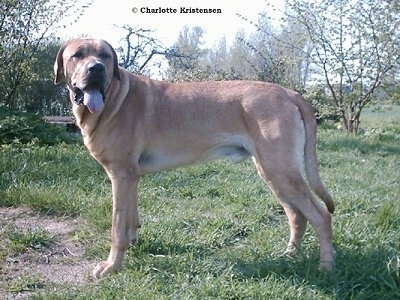
Elmedals Kvaser, photo courtesy of Charlotte Kristensen
Other Names
Pronunciation
Description
A Mastiff-type dog of large size, rectangular and strongly built, with composed and powerful movement, its appearance is dominated by powerful forequarters. The head is massive and wide, the neck is sturdy with some loose skin, and the chest is broad and deep. At rest, the head is carried rather low and stooping, and the tail hangs down sabre-like. When moving, the tail is carried higher, but not over the topline. When the dog is attentive or aroused, the head is carried higher and the tail is raised above horizontal. The coat is short and close lying, with a thick undercoat. The coat comes in yellow with black mask, golden red and black. White markings on chest, feet and tip of tail are optional.
Temperament
Calm, good tempered, friendly, yet watchful, the owner of the Broholmer must show great self-confidence. The objective in training this dog is to achieve pack leader status. It is a natural instinct for a dog to have an order in their pack. When we humans live with dogs, we become their pack. The entire pack cooperates under a single leader; lines are clearly defined and rules are set. Because a dog communicates his displeasure with growling and eventually biting, all other humans MUST be higher up in the order than the dog. The humans must be the ones making the decisions, not the dogs. That is the only way your relationship with your dog can be a complete success.
Height, Weight
Height: 22 - 30 inches (70 - 75 cm)
Weight: 87 - 176 pounds (40 - 80 kg)
Health Problems
Living Conditions
The Broholmer will do okay in an apartment if it is sufficiently exercised. They are relatively inactive indoors and a small yard will do.
This breed needs a daily, long walk, where the dog is made to heel beside or behind the human holding the lead. Never in front. Like many other giant breeds it is important to remember that too much forced, vigorous exercise is not good for a young dog's growth and development, so watch your puppy for any signs, but it still instinctually needs a daily walk.
Life Expectancy
About 6-11 years
Litter Size
About 4 to 10 puppies
Seasonal heavy shedder
The Danish Broholmer originated in Denmark. As a type this breed has been known since the Middle Ages, when it was used for hunting (stag-hunting). Later on it was used mainly as a guard dog for large farms and manors. At the end of the18th century these dogs were breeding pure and increased in number thanks to the royal game keeper Sehested of Broholm, from where the breed inherited its name. After the Second World War the breed almost became extinct, but around 1975 a group of committed people organized a group called "The Society for Reconstruction of the Broholmer Breed." They were supported by the Danish Kennel Club and began the work of reviving the breed.
Recognition
- ACA = American Canine Association Inc.
- AKC/FSS = American Kennel Club Foundation Stock Service ® Program
- DRA = Dog Registry of America, Inc.
- FCI = Fédération Cynologique Internationale
- UKC = United Kennel Club
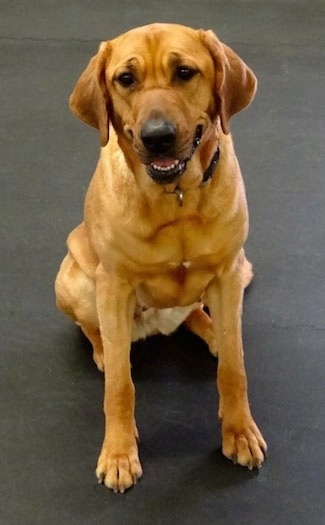
Honor the Danish Broholmer at 3 years old—"Honor is the rarest breed in the USA. She is a beautiful "sweet as pie" Danish Broholmer. She is a big girl, at 28 inches at the withers and 120 pounds. She thinks she is a lap dog and loves giving kisses to whomever she meets. She needs moderate exercise and loves long walks. She is easy to train and is just full of love, although her size and bark would scare any intruder. We plan on breeding our first US born litter with Honor this year."
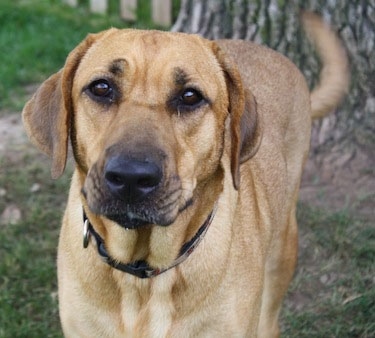
Honor the Danish Broholmer at 3 years old
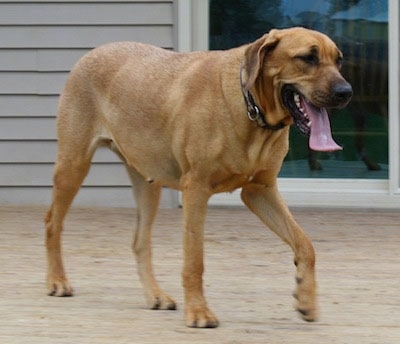
Honor the Danish Broholmer at 3 years old
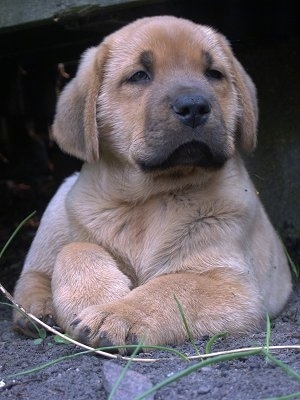
Aslan the Danish Broholmer as a 4-month-old puppy
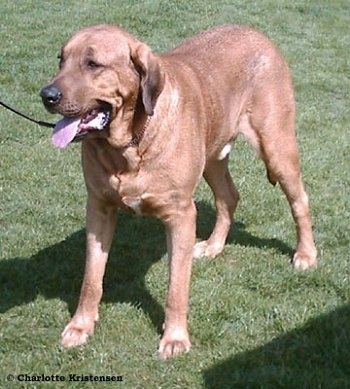
Dani, photo courtesy of Charlotte Kristensen
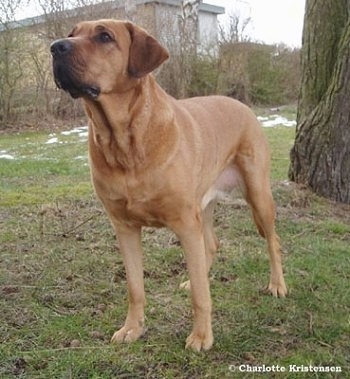
Signe, photo courtesy of Charlotte Kristensen
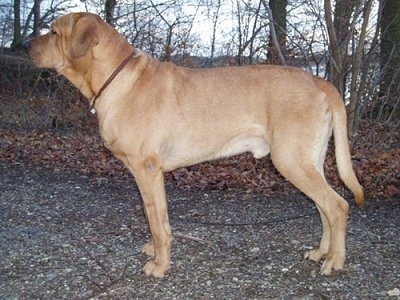
Elmedals Kvaser at almost 3 years of age, photo courtesy of Charlotte Kristensen
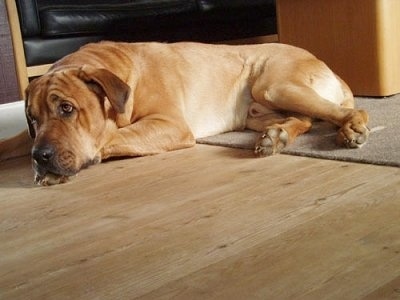
Resting like a real Broholmer. Photo courtesy of Charlotte Kristensen
Breeders
The Material contained herein may not be reproduced without the prior written approval of the author. Contents & Graphics Copyright © Dog Breed Info Center® (C) 1998- . All Rights Reserved. Our work is not Public Domain.
Broholmer
The Broholmer or Danish Broholmer is a large Mastiff-type dog that has been used for guarding homes, estates, and large farms. It comes with a rectangular, strongly built body, wide, massive head, strong neck, broad, and deep chest. When at rest, its head is carried low, and the tail hangs down slightly curved, saber-like. When on the run, it moves its head higher and raises its tail above horizontal.
Broholmer Pictures
 Broholmer Images
  Broholmer Photos
 Broholmer Pictures
  Broholmer Puppy
 Broholmer
  Danish Broholmer

 Images of Broholmer
 Photos of Broholmer
  Pictures of Broholmer
Quick Information
Video: Adult Broholmer Playing with a 3 Month-Old Puppy
Other Similar Breeds:
The origin of Broholmers dates back to the 1500s when English Mastiff-type dogs were gifted to the Danish royal family by King James VI. During the Medieval Period, some Mastiffs were also brought by the Danish Vikings from their travels. These dogs were crossed with local “butcher’s dogs” or slagterhunden, producing the Old Danish Dogs, which are the earliest ancestors of the present-day Broholmers.
Valued by the wealthy and aristocrats, these Old Danish Dogs were not just used for guarding estates and castles but also for herding sheep and livestock as well as hunting deer. Later on, the interest for these dogs declined, as the need for big hunting dogs diminished. During the mid-1800s, these dogs almost disappeared. However, a Danish aristocrat, Niels Frederik Sehested, started a breeding program that saved the breed from extinction, also improving its numbers.
At the start of the 20th century, epidemics, problems with inbreeding, and World Wars pushed the animals towards extinction again. In 1974, a group of people along with the Danish Kennel Club started working on reviving the breed.
Temperament and Behavior
Having a Broholmer in your family will surely bring joy to your life. Being fond of people of all ages, including the elderly and the children, it makes a great family companion. It displays extreme devotion to its family with its life always revolving around its people.
Always aware of its surrounding, it will not hesitate to defend its family from any real threat. Although it is wary around strangers, it does not show aggression towards unfamiliar people or other pets.
Grooming
Health Problems
For its size, the Danish Broholmer is quite an agile breed. Aside from going on long daily walks, it loves fetching balls, catching a Frisbee, running in the yard, and taking part in agility. Without daily activity, your Broholmer might develop behavioral issues.
Its short, smooth fur may be brushed weekly using a hound glove or soft-bristle brush. You may wipe its coat with a moist washcloth to keep it clean. It does not have to be bathed unless it is smelly or visibly dirty.
The Danish Mastiff does not generally suffer from any major health concerns. Some individuals may be affected by problems of bones and joints, including patellar luxation, elbow dysplasia, and hip dysplasia.
The Broholmer, being smart, loyal, and obedient by nature, responds to training.
Since it is naturally suspicious of strangers, early socialization is necessary to teach it how to get along politely with unknown people and guests coming to your house. Make sure your Broholmer puppy is handled and cuddled by different people. Tell them to hold your pet in various positions, rub its muzzle, look in its ears, and stroke its back. Expose your puppy to different sounds, like the ringing of telephones, radios playing, kitchen sounds, buses moving by, children playing, and so on.
It is essential for large breeds like Broholmer since your dog’s, your guests’, and your safety is at stake. Teach your dog not to start jumping up when a visitor is at the door. Make your pup sit and stay politely to greet your guests.
A Broholmer puppy requires food exclusively designed for large dog breeds. Do not add any supplements, especially calcium. A pup should have three-four meals per day until it is four-five months old while an adult should be given two meals on a daily basis.
Leave a Reply Cancel reply
© 2018 (101 Dog Breeds). All rights reserved. Reproduction in whole or in part without permission is prohibited.
Your access to this site has been limited
Your access to this service has been temporarily limited. Please try again in a few minutes. (HTTP response code 503)
Reason: Access from your area has been temporarily limited for security reasons.
Important note for site admins: If you are the administrator of this website note that your access has been limited because you broke one of the Wordfence advanced blocking rules. The reason your access was limited is: "Access from your area has been temporarily limited for security reasons.".
If you are a site administrator and have been accidentally locked out, please enter your email in the box below and click "Send". If the email address you enter belongs to a known site administrator or someone set to receive Wordfence alerts, we will send you an email to help you regain access. Please read this FAQ entry if this does not work.
Generated by Wordfence at Fri, 23 Feb 2018 7:01:27 GMT.
Broholmer
FCI nr. 315 Gruppe 2 Broholmer Danmark

Beskrivelse af Broholmer
Opdateret, februar 2015
Broholmer er den originale, danske mastiff race, som har været kendt siden middelalderen. Racen er nu anerkendt som national dansk hunderace.
Forgængerne til den nuværende Broholmer blev anvendt som jagt- og vagthunde på de adelige godser. Disse hunde kom formentlig fra den type af gamle engelske Dogge-hunde, der senere blev renavlet til Engelsk Mastiff. Man mener nemlig, at de første af disse hunde, kom til Danmark som gaver fra Kong James VI af Skotland (som giftede sig med Kong Frederik II's datter i 1589). Disse hunde blev siden parret med nationale danske hunde.
Kong Frederik d 7. og Grevinde Danner havde flere Broholmere, hvor den ene, Tyrk, stadig kan ses udstoppet på zoologisk museum i København.
Sidst i det 19. århundrede blev Broholmer racen renavlet og opformeret af Grev Sehested fra Broholm; hvorfor racen fik navnet Broholmer. Greven skrev også den originale standard for hunderacen Broholmer og Broholmeren blev ganske udbredt i denne periode.
Som de fleste andre mastiffer og helt store hunderacer, var Broholmeren stærkt decimereret i antal efter 2. verdenskrig. Blandt andet på grund af omkostningerne ved at fodre på så store hunde, var det meget få forundt at have ressourcer til at fodre et ekstra familiemedlem i de trange krigsår. Racen eksisterede dog - i en eller anden udstrækning - helt frem til 1970'erne, hvor en gruppe hundefolk under DKK i 1974 stiftede ”Selskabet til Rekonstruktion af Broholmerracen”. Man startede her en landsdækkende eftersøgning for at finde hunde, som var egnet til at rekonstruere den helt oprindelige Broholmer-race.
Derefter begyndte et intensivt avlsarbejde for at genskabe både type og sind i den originale hunderace, og få antallet af individer op på et bæredygtigt niveau. Et arbejde, der stadig foregår i dag under klubben Broholmerselskabet.
Frem til 1. januar 2015 blev alt avl styret af Broholmerselskabets Avlsudvalg, som på baggrund af de obligatoriske mentaltests, exteriørbedømmelser (udstillinger) og sundhedsresultater, sammensatte hunde som avlspartnere udfra testresultaterne. Ved indgangen til 2015 blev det dog også muligt at avle frit på racen efter Dansk Kennel Klubs basiskrav.
Det kan dog stadig være vanskelig at få lov til at købe en ægte Broholmer, hvis man ikke ønsker at deltage i avlsarbejdet og nye ejere opfordres til at blive medlemmer af Broholmerselskabet, for bl.a. derigennem at stille de bedst egnede hunde til rådighed for videre avl. Man skal også påregne, at mange opdrættere stadig kræver at man mentaltester, udstiller og sundhedstester hvalpen, selvom den ikke skal bruges til avl eller udstilling.
På trods af disse krav, er det dog altid afgørende, at man vælger en ægte, stambogsført Broholmer, hvis man vil sikre sig at udseende, sundhed og mentalitet er som i den originale, danske hunderace. En "broholmer" uden stamtavle kan kun betegnes som en blandingshund; da Broholmerens type, udseende og mentalitet langt fra er stabil nok til at avle hvalpe fra ikke-godkendte forældre.
Det er også vigtigt at notere sig, at alle hvalpe, som er født efter parringer, der er godkendt af Broholmerselskabet, får Broholmerselskabets certifikat og et såkaldt Y-nummer på stamtavlen. Hunde, der er avlet efter DKK/FCI's basiskrav får derimod et X-nummer på stamtavlen og ingen certifikat.
Broholmeren blev officielt anerkendt af FCI i 1982.
Temperament på Broholmer
En Broholmer en en typisk Mastiff, når det kommer til overblik, værdighed og rolig udstråling. Hundene er også meget vagtsomme, selvsikre, godmodige og egenrådige - og ubestikkeligt trofaste overfor deres familier.
En Broholmer fungerer godt som familiehund, men bør også jævnligt komme ud og opleve verden. Racen har ikke et stort motionsbehov, men vil dog gerne med en tur i skoven eller lignende. Det vigtigste for en Broholmer er kontakt til familien, og racen egner sig derfor slet ikke til hundegårde eller lange dage alene.
Med børn er en Broholmer tålmodig og beskyttende, og hundene deltager også i leg og sjov. Broholmeren kan dog også være så beskyttende, at den forsøger at stoppe for mere voldsom leg.
Omgang med andre husdyr er sjældent et problem, hvis hundene præges til dem fra hvalp, for racen har sjældent ret meget jagtinstinkt.
En del Broholmere er meget lidt interesseret i kontakt med kønsfæller, efter de er udvokset, så det er ikke en hunderace, som trives godt i store flokke med fremmede hunde eller som vil lege med enhver den møder.
Det er vigtigt at bruge både tid og ressourcer på at socialisere, miljøtræne og lydighedstræne sin Broholmer fra den er hvalp. En hund i denne størrelse, som bliver bange, forskrækket eller stresset når den er ude af huset, kan være meget svær at kontrollere - og hunden vil elske dig for at du lærer den at begå sig ude i verden, så den ikke henvises til et liv i haven.
Pasning og anskaffelse af Broholmerhvalp
En Broholmer kræver ikke ret meget pleje i dagligdagen. Pelsen aftørres med en fugtig klud, eller børstes med en gummibørste i fældeperioderne. Hundene spiser til gengæld meget, og er derfor ikke helt billige at have på kost. Det er vigtigt, at racen får korrekt ernæring - ikke mindst under opvæksten - og der må derfor ikke spares på kvaliteten af maden.
En voksende Broholmer skal heller ikke udsættes for trapper, lange gåture, spring op og ned og andre aktiviteter, der belaster hundens led.
Mange opdrættere forventer (stadig) at man som hvalpekøber bidrager til rekonstruktionen af racen. Herunder at hunden både udstilles, mentalbeskrives og sundhedstestes - og nogle opdrættere vil også stadig kræve, at man avler videre på specielt velegnede hunde.
Det er også ilde set, hvis man avler uregistrerede blandingshvalpe på en ægte Broholmer, ligesom la ngt de fleste opdrættere af racen, kræver at man skal være medlem af Broholmerselskabet, for overhovedet at komme i betragtning til en ægte Broholmerhvalp. Af samme grund, finder man ikke ægte Broholmere i Gul og Gratis, Den Blå Avis og lignende annoncemarkeder, på trods af der til tider annoceres med Broholmere disse steder.
For at sikre man får en ægte Broholmer bør man derimod altid rette henvendelse til Hvalpeanvisningen under Broholmerselskabet, som kan hjælpe en videre til en opdrætter med hvalpe. Man skal også påregne en vis ventetid på en hvalp, selvom den ikke er så lang som tidligere.
Broholmer har oprindelse i Danmark
Broholmer har en højde på 70 - 75 cm og en vægt på 40 - 75 kg
Gul med sort maske. Rødgylden. Sort. Gerne med hvid brystplet, hvidt på poterne og med hvid halespids.
dansk mastiff, gammel dansk hund, brobasse
Broholmer er en vagthund og hører under FCI-gruppen for "Schnauzere, pinschere, molosser og sennenhunde" (Gruppe 2)


Leder du efter små hunderacer?
Disse 15 andre hunderacer under vagthunde er mindre end Broholmer :
Alle billeder af Broholmer


Avlsrestriktioner Dansk Kennel Klub
Ny restriktion for parringer efter den 1. januar 2015:
HD-krav: Afkom kan kun stambogsføres, såfremt begge forældre før parring har en officiel HD-status registreret i DKK. En hund med HD grad D eller E kan undtagelsesvis benyttes i avl, hvis opdrætteren vurderer, at hundens samlede bidrag til racen vil være positivt. Avlspartneren skal i så tilfælde altid være HD fri (grad A eller B) Derudover anbefales det for racen, at det gennemsnitlige HD-indeks for begge avlspartnere bør være minimum 200.
AD-krav: Afkom kan kun stambogsføres, såfremt begge forældre før parring har en officiel AD-status registreret i DKK. En hund med AD grad 3 kan undtagelsesvis benyttes i avl, hvis opdrætteren vurderer, at hundens samlede bidrag til racen vil være positivt. Avlspartneren skal i så tilfælde altid være AD fri (grad 0)
Mentalbeskrivelseskrav: Afkom kan kun stambogsføres, såfremt begge forældre før parring er mentalbeskrevet.
Præmieringskrav: Begge forældredyr skal før parring være præmieret på en FCI/DKK anerkendt udstilling med mindst Very Good af en dommer fra et panel særligt udvalgt af DKK, alternativt være avlsgodkendt før 1. januar 2015 efter daværende regler.
Broholmerselskabet har hertil yderligere eller skærpede avlsrestriktioner, for at hvalpen kan opnå Broholmerselskabets Certifikat og et Y-nummer.
Yderligere information
Kontakt "Broholmerselskabet" for uddybende information om avl og opdræt af Broholmer.
Udvalgt hunderace
Mastino Napoletano
Vagthund fra Italien

Mastino Napoletano er en stor molosser hund, som kan føres mange tusinde år tilbage til de romerske krigshunde. I dag anvendes Mastino Napolitano i hjemlandet Italien som politihund, i kra.
Hunderacer
Nyeste hunderacer
Vagthund fra Danmark
Terrier fra Skotland
Jagthund fra England
Terrier fra Storbritannien
Hyrdehund fra England og Skotland
Broholmer hund
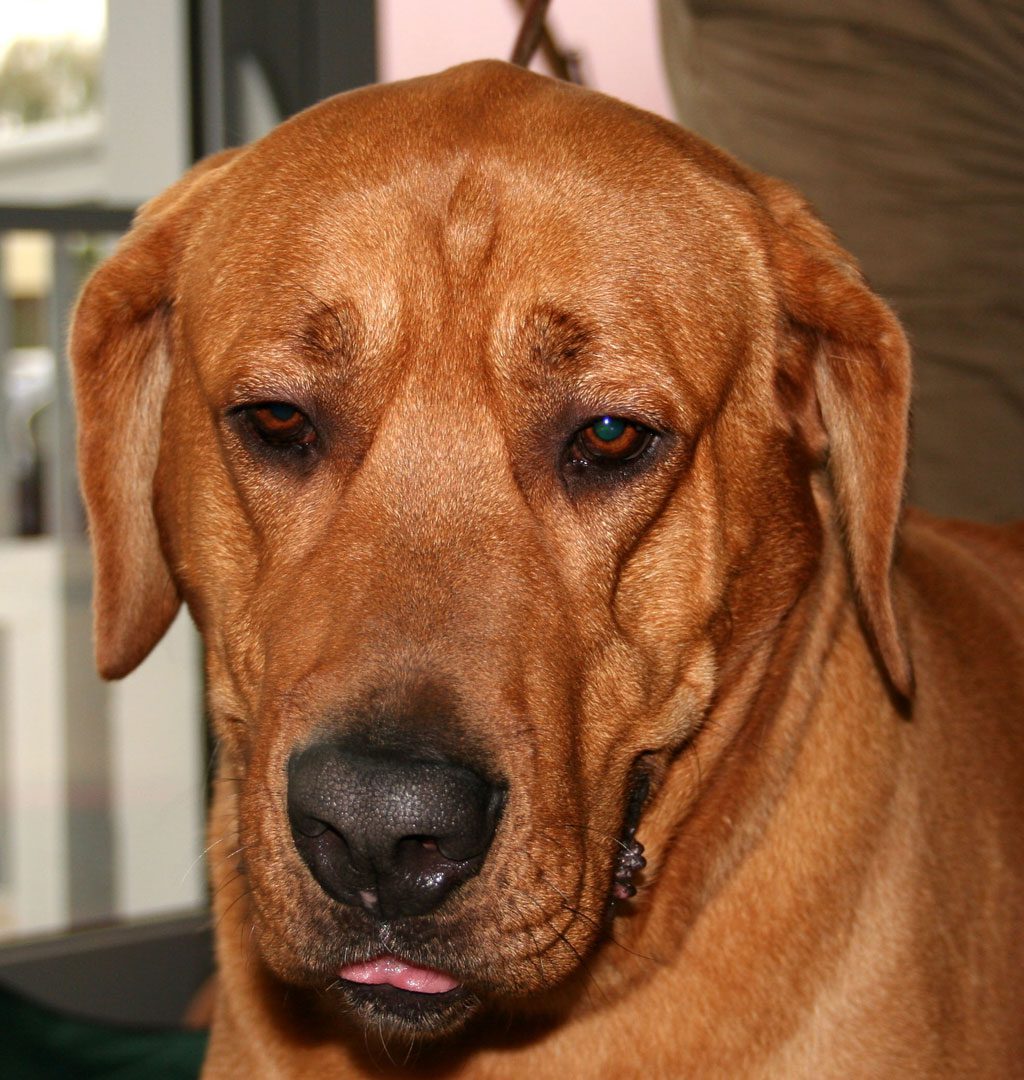
The Broholmer (or Danish Mastiff) It is a breed of molosser type dog, originally from Denmark.
They come from the mastines sent from England to the great Danish Lords and there were bred with dogs that already had.
The type of this breed has been known since the middle ages, When used as a deer hunting dog. It was subsequently used as a watchdog for large farms and feudal lands. At the end of the 18th century, These dogs were bred purebred and increased in number thanks to the Earl Sehested of Broholm, from whom they inherited the name.
After World War II the race was on the verge of extinction, but around 1975 a group of fans were responsible for the custody of the race, later, organized under the name society for the reconstruction of the Broholmer breed and sponsored by the Danish Kennel Club they began their work of reconstruction.
It is a dog of Doge of large size type, rectangular and strong Constitution; its motion is regular and energetic. His appearance is dominated by the powerful forelimbs. The head is broad and solid; strong neck with some loose skin, and the chest wide and deep.
The standard size is of 75 cm in males and 70 cm in females approximately. The weight of the males ranges from the 50 and 70 kg, While the female is of 40 to 60 kg. Its hair is short, tight and contiguous, with a thick inner layer of hairs.
Fallow is rather low and bent toward the ground and the tail head hanging downward Saber-shaped. When is on the move, the tail takes her highest, but not on the line of the spine. When the dog is alert or excited, It takes the high head and lifts its tail above the horizontal.
It is used as a companion dog, It is calm, with good temperament and friendly. However it is also a good guardian.
This breed needs a long daily walk, avoiding the dog take us the lead. That way we avoid his leadership.
It is important to remember not to put young dogs to too much strenuous exercise that thereby we down their full development.
The Broholmer They must be socialized Since young people already that are not very friendly with strangers and are territorial, being able to get to attack people who you dislike.
Broholmer hund
Medlemslogin
Hvad kendetegner en Broholmer?
Broholmeren er en meget kærlig og hengiven hund. Broholmeren er meget lydhør og ønsker kun at gøre sin ejer tilfreds. Det er en vagtsom hund, som giver hals, når der er fremmede ved døren. Den optræder adstadigt og selvsikkert. Broholmeren er en fortrinlig familiehund, der på grund af dens blide sind skal behandles med stor omtanke.
Hvor meget motion/aktivering kræver en Broholmer?
Fordi Broholmeren er en stor hund, er det vigtigt at holde den i gang. Der kræves ikke timelange gåture hver dag, men hunden er altid glad for at komme ud og få rørt musklerne.
Hvordan aktiverer man bedst en Broholmer udover gГҐture?
Broholmeren er en solid og stærk hund, som er velegnet til at trække. Man kan med held få sin Broholmer til at trække en vogn eller slæde. På grund af dens blide sind er Broholmeren en fortrinlig omsorgshund. Der er eksempler på Broholmere, der er redningshunde, schweisshunde, sporhunde, går til rally osv.
Er der pelspleje eller lign., man bør være opmærksom på?
Pelsplejen er minimal. En tur med børsten en gang om måneden er rigeligt. Broholmerne kan i perioder fælde meget.
Har I nogle gode rГҐd til folk, der overvejer at anskaffe sig en Broholmer?
Som voksen har Broholmeren et middel aktivitetsniveau, men unghunden har en del mere energi, hvilket man – hundens størrelse taget i betragtning – bør have med i sine overvejelser, inden man beslutter sig for at anskaffe sig en Broholmer. Vi taler om en hvalp på 40 – 60 kg., der ønsker at udforske verden. Hunden skal respekteres for det blide væsen, den har, og trives derfor bedst i hjem, hvor der er gensidig respekt mellem hjemmets mennesker og hunden.
Broholmeren er til dig, der .
В· Vil have en hengivende, solid og rolig hund
· Vil have en familiehund man kan være tryg ved
В· Vil have en hund der er besidder godt temperament
Klubforum for Medlemmer
Seneste nyt
Broholmerselskabets tillægsaftale er opdateret
16. februar 2018
Hjælp til artikel om den sorte Broholmer
12. februar 2018
Efterlysning: Hunde helbredsoplysninger og samtykke
Betaling af kontingent for 2018
Webmaster sГёges
Aktiviteter/kalender
LГёvbakke Dyrehave, Herning
Generalforsamling 2018 (Sjælland)
Kreds 1 Ringtræning 2018
pr-arrangement i Den fynske landsby
pr-arrangement i Den fynske landsby
Historisk Dyrskue Sdr. Hygum
Historisk Dyrskue Hjemstavnsgaarden Sdr. Hygum 10-17. Ribevej 74, Sdr. Hygum,

Bliv medlem
Broholmerselskabet
© 2018 Broholmerselskabet. All rights reserved.
Hound Group
Most hounds share the common ancestral trait of being used for hunting. Some use acute scenting powers to follow a trail. Others demonstrate a phenomenal gift of stamina as they relentlessly run down quarry. Beyond this, however, generalizations about hounds are hard to come by, since the Group encompasses quite a diverse lot. There are Pharaoh Hounds, Norwegian Elkhounds, Afghans and Beagles, among others. Some hounds share the distinct ability to produce a unique sound known as baying. You'd best sample this sound before you decide to get a hound of your own to be sure it's your cup of tea.

Afghan Hound
A breed of charming contradictions: independent and aloof, but sweet and profoundly loyal.

American English Coonhound
Sweet, Melow, Sociable

American Foxhound
Sweet-tempered and easygoing, but also stubborn and independent

An intelligent, independent, but affectionate and alert breed. Can be aloof with strangers.

Basset Hound
Easygoing, laid-back, and even a bit lazy, Bassets are great family pets.

Beagles are loving and lovable, happy, easygoing, and companionable.

Black and Tan Coonhound
Easygoing, friendly, bright; mellow by the fireside, rugged and brave on the trail.

Bloodhound
Inquisitive, independent, friendly, affectionate with family, can be reserved with strangers

Bluetick Coonhound
A smart and devoted charmer at home; a fearless, tenacious pursuer on the trail.

Loyal, affectionate, regally dignified; charming but independent-minded.

Cirneco dell’Etna

Go look up the word “spunky.” We’ll wait. Did you see a photo of a Dachsie? We thought so.

English Foxhound
The prototypical pack hound: gentle, affectionate, and sociable.

Independent, gentle, noble, and oh so sweet, but intense when on the run.

Outgoing and friendly; true pack hounds, they generally get on well with other dogs.

Ibizan Hound
Even-tempered and polite; a bit aloof, but a sweet-natured, family-oriented housemate.

Irish Wolfhound
Calm, dignified, kindly; courageous but not aggressive

Norwegian Elkhound
Confident, dependable; dignified but friendly.

Otterhound
A big-personality dog: boisterous, affectionate, cheerful.

Petit Basset Griffon Vendeen
Alert, vivacious, and happy-happy-happy!

Pharaoh Hound
Smart and alert; noble, but friendly and affectionate.

Sweetly gentle with people, but fearless, implacable, and bold at work.

Portuguese Podengo Pequeno
Lively, alert, playful; charming and well mannered around the house.

Redbone Coonhound
Even-tempered, amiable, and kindly at home, but a tiger on the trail.

Rhodesian Ridgeback
Dignified, even tempered; affectionate toward loved ones, reserved with strangers.

Gentle, dignified, loyal but independent-minded.

Scottish Deerhound
Dignified, gentle, polite; quietly intelligent and perceptive.

Noble and somewhat aloof, however are faithful to owners

Treeing Walker Coonhound
Smart, brave, and often described as sensible and courteous.


Комментариев нет:
Отправить комментарий