


Norsk Briard Klubb
Da er utstillingsseso ngen i gang igjen, og det er gledelig å se at flere juniorer allerede nå sparker godt fra seg i starten av året! Det lover godt for rekrutteringen!
Resultatlista så langt i konkurransen om årets briard har en junior på topp. Så er det opp til oss andre med eldre hunder og se om vi greier å matche disse lovende jyplingene.
Stillingen før årets andre utstilling er følgende:
Nr 1 Top Wesselton's Jack By Basker, 13 p
Nr 2 Goalgetter No 6 Inbalance Mia Amore, 8 p …
Norsk Briard Klubb
Siden det er ønske om å minne våre medlemmer på årsmøtet og hvilke kandidater som er på verv, så legger vi ut invitasjonen til årsmøte igjen.
Husk at fristen for å foreslå kandidater til verv i styret, er 14. april. Forslag sendes valgkomitéen.
Dato for årsmøtet er 19. mai - ikke 20. mai som det…

Norsk Briard Klubb
I forbindelse med at NKK fra i år innfører nordiske utstillinger som skal erstatte en del av de internasjonale utstillingene, har styret gått gjennom reglene for utregning av årets briard og picard. På de nordiske utstillingene deles det ut nordisk cert og ikke cacib. Styret i NBrK har besluttet at vi gir samme poeng for nordisk cert og nordisk reservecert som vi gir for cacib og res. cacib.
Dvs at et nordisk cert gir 4 poeng, mens nordisk res. cert gir 2 poeng.
Norsk Briard Klubb
GJETERHUNDKURS I VÅGÅ 2018!
Norsk Briard Klubb inviterer til gjeterhundkurs for medlemmer i Norsk Briard Klubb sommeren 2018.
Instruktør: Ørjan Halvorsen.
Dato helgekurs: 15-17. juni (uke 24)
Dato ukeskurs: 9-13. juli (uke 28)
Dato helgekurs: 7-9. september (uke 36)

Norsk Briard Klubb
Årets nyttårsgave fra Norsk Briard Klubb:
Et nytt nummer av BRIARD  :) .
:) .
Tusen takk til alle som har bidratt med bilder og innlegg og historier i bladet!
Briard
UTILIZATION
GENERAL APPEARANCE
Hardy dog, supple, muscular and well proportioned, of vigorous movement, balanced temperament, neither aggressive nor timid.
Penalization: Aggressive, soft, timid, clumsy.
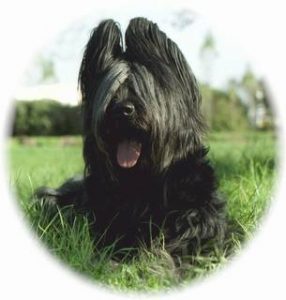
Character: The Briard, not living in a outdoor kennel, is a perfect and faithful loyal family dog. The incessant contact to his family is the most important thing for the Briard. He wants to take part in everything. Therefore, he will always choose a place, where he can be in the middle of events. He has a well balanced personality and is neither aggressive nor timid, but robust and courageous. Towards strangers the Briard acts reserved, but is not unfriendly; he just wants to be the one taking the first step.
Visit Caipirinha’s Briard & Briards de la Maison du Garde-Barrière
Background:
Likely to all herding dogs, the Briard’s origin goes far back. Some specimen shall have already been bred at the royal court of Charles the Great (Karl dem Grossen, 768 – 814). There is evidence that in the church of Montdidier, destroyed in 1918, there was a sign from the year 1371 deposited, which shows a fighting scene where a dog looking like a Briard got the upper hand over the murderer of his master. Concretely described the Briard was the first time by Abbot Rozier. In the year 1863 for the first time a Briard appeared at a dog show in Paris, in 1897 a first standard was constructed by the Club of Herding Dogs. Time by time the specimen with the woolly coat disappeared and the goat hair got the upper hand. 1909 some Briard friends founded the “Club des Amis du Briard” and the standard was reworked.
From the breed standard
SIZE: 0,62 m to 0,68 m for males 0,56 m to 0,64 m for females. The length of the body must be more important than the height at shoulders. The general appearance of the Briard is rangy.
Penalisation: Cobby dog : no Excellent. Sizes superior to 0,68 m and 0, 64 m. Disqualification: Below the minimum. More than 2 cm above the maximum size. All subjects not reaching the minimum size cannot be confirmed.
HEAD: Strong, long, pronounced stop midway between the top of the head and the tip of the nose, furnished with hair forming beard, moustache and eyebrows slightly hiding the eyes.
Penalisation: Short head, too long, no balance between muzzle and skull. Disproportion between head and body. Hairy head to the extent of hiding the shape; beard, moustache and eyebrows insufficient, stop too pronounced or non-existent.
Disqualification: The above mentioned faults too pronounced.
Forehead: Very slightly rounded.
Penalisation: Too flat, too round, too broad, sloping on the eyes.
Top of Muzzle: Nasal bridge straight. Penalisation: Too long, weak, too short. Nasal bridge convex (Roman nose).
Muzzle: Neither narrow nor pointed.
Penalisation: Pointed, narrow or too thick, pendulous flews.
Nose: More square than round, always black, strong and open.
Penalisation: Small nose, pinched, pointed, other than black or with traces of pink.
Disqualification: Brown or lighter coloured nose, pink.
Teeth: Strong, white and perfectly adapted.
- Absence of 1 incisor
- Defective mouth, slight prognathism without loss of contact.
- Absence of 1 premolar
- Absence of 2 incisors
- Absence of 2 premolars.
Disqualification: Pronounced prognathism with loss of contact. Absence of 2 premolars 4 ( PM4) on the lower jaw or absence of altogether 3 teeth whatever they are.
Visit Caipirinha’s Briard & Briards de la Maison du Garde-Barrière
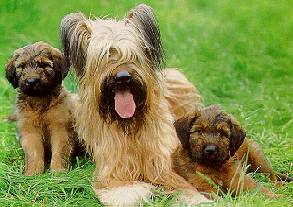
Eyes: Horizontal, well open, quite large, not slanting, of dark colour, intelligent and calm expression. A grey eye in a grey dog is not to be penalized.
Penalisation: Eye too small, almond shaped or of a light colour.
Disqualification: Eyes dissimilar, haggard, too light in colour.
Ears: Set high, preferably cropped and carried erect; not flat against the head and rather short if uncropped. At equal quality, preference shall be given to the dog whose erect carried ears have been cropped. The length of the uncropped ear must be equal or slightly less than half of the length of the head, always flat and covered with long hair. In most of the European countries cropping has already been forbidden, there are only few countries which still allow it. Since # it is strictly forbidden to import any cropped dog, even if in the country of birth cropping is still allowed
Penalisation: Covered with too short hair, too long, carried badly.
Disqualification: Twisted ears, set too low below the eye-line, covered with short hair, naturally erect, graft of cartilage.
NECK: Muscular and disengaged from the shoulders.
Penalisation: Reach of neck too long, frail or too short.
CHEST: Wide (width of the hand between the two elbows), deep and well let down to the elbows.
Penalisation: Too narrow, not sufficiently or too much let down, lacking depth, ribs too flat or too round.
Straight Penalisation: Slightly hollow, slight roach back.
RUMP: Very slightly inclined, of a slightly rounded shape.
- Rump too inclined, too straight,
- Same faults accentuated,
- Rump definitely higher than the withers.
QUARTERS: Well muscled, with strong bone and vertical limbs.
- Legs not vertical, loose shoulders, thighs set too much apart, weakness in pasterns or too straight, leaning on toes,
- Bad angulation of the shoulder, short hair on the legs, frail legs, weak bone structure.
Disqualification: Forelegs seriously not perpendicular.
HOCKS: Not too near to the ground and angled with the leg nearing the vertical below the hock.
Penalisation: Too far from or to near to the ground, bad angulation.
Disqualification: Hindlegs seriously not perpendicular.
TAIL: Entire, well furnished, forming a hook at the tip, carried low, not deviated, reaching the point of the hock or beyond it at most 5 cm.
Penalisation:
- A little too short, no hook, hair too short,
- Carriage very much exceeding the line of the back,
- Carriage below or under the belly,
- Carriage under the belly when in action.
Disqualification:
- Carried on the back in hunting horn or perpendicular (stiff),
- Trace of operation rectifying the tail carriage.
FEET: Strong, round shaped (intermediate between cat feet and hare feet).
- Feet too long, flat, splayed,
- Toeing in or out,
- Not sufficiently covered with hair.
Disqualification: Feet seriously not perpendicular.
Penalisation: Grey nails.
Disqualification: White nails.
Penalisation: Without elasticity, too flat, too soft.
TOES: Tightly closed
Penalisation: Open toes, too long or held flat.
COAT / Texture: Flexible, long, dry (type of goat hair), with a light undercoat.
Penalisation:
- Not dry enough, slightly curly, no undercoat. In case of requiring acceptance for breeding: postponement of 6 months,
- Too short,
- Fine hair.
Disqualification: Coat (hair) shorter than 7 cm. Coat soft or woolly.
COLOUR: All uniform colours are admitted apart from those mentioned below. The dark shades are to be recommended. Not to be confused the bi-colour with a slightly lighter shade on the extrimeties which is nothing more than a beginning of depigmentation. This shade, slightly lighter, must remain in the same range of the fawn colours (dark fawn or light fawn, dark black on lightened black, dark grey on lighter grey, etc). The fawn must be warm and uniform, neither light or washed out.
Penalisation:
- Black with too many reddish glints,
- Fawn not warm enough, white patch on chest,
- Blackening overlay to pronounced at the edge of the shading.
- Very light fawn, washed out.
Disqualification:
White shade, brown (chestnut), mahogany, bi-colour, white blaze, white hairs on tip of feet. Fawn coat with black overlay forming a mantle. Colour too light.
Note: For the bi-colour, look at the colour of the skin which will be bluish under the dark parts and pinkish under the light parts.
DEWCLAWS: DOUBLE dewclaws on the back legs (see explanatory sketch plate A). THE DOGS, EVEN OF VERY GOOD TYPE, WHO ONLY HAVE ONE DEWCLAW, WILL NOT BE GIVEN AN AWARD. Acceptance for breeding will be refused.
The double dewclaws must be made up of two bony parts with nails, placed as near the ground as possible, assuring a better setting of the foot.
Penalisation:
- Placed too high (mid-way of the hock),
- Lack of two nails,
- Lack of bony section in a double dewclaw (see explanatory sketch, plate B.)
Disqualification:
- Single dewclaws,
- No dewclaws,
- Lack of two bony sections in a double dewclaw, even if the nails are there,
- Lack of one bony section in each double dewclaw, even if the nails are there, (see sketch explaining plate C)
ACCEPTANCE FOR BREEDING: ALL MOTIVES OF DISQUALIFICATION, ALL QUALIFYING LESS THAN GOOD, WILL MEAN NO ACCEPTANCE OF THE SUBJECTS FOR BREEDING.
FAULTS: Any departure from the foregoing points should be considered a fault and the seriousness with which the fault should be regarded should be in exact proportion to ist degree.
Male animals should have two apparently normal testicles fully descended into the scrotum.
Это видео недоступно.
Очередь просмотра
- Удалить все
- Отключить
Berger de Brie (Briard): Informationen zur Rasse
Хотите сохраните это видео?
- Пожаловаться
Пожаловаться на видео?
Понравилось?
Не понравилось?
Текст видео
Berger de Picardie (Picard): bis 65 cm / 32 kg
Berger de Brie (Briard): bis 68 cm / 40 kg
Berger de Beauce (Beauceron): bis 70 cm / 50 kg
Der Ursprung der Französischen Hirtenhunde ist kaum dokumentiert und geklärt. Für diese sehr alten Hof- und Bauernhunde hat man sich bei der systematischen Erfassung und Zucht erst spät interessiert. Zwischenzeitlich waren sie vom Aussterben bedroht. Einzig der Briard ist bis heute zahlreich vertreten und erfreut sich großer Beliebtheit. Dabei sind sie alle trotz ihres Eigensinns sehr vielfältig einsetzbar und ausbildbar. Durch ihre Intelligenz und Lernfähigkeit sowie ihr Einfühlungsvermögen erweisen sie sich z. B. in den sensiblen Bereichen der Rettung oder auch Behindertenbegleitung als sehr nützlich. Lernfreudig sind sie dabei nicht immer. Zu ihrer Erziehung gehört viel Verständnis für ihr Wesen. Anfängerhunde sind sie deshalb nicht. Bei körperlich aktiven Menschen und Auslaufmöglichkeiten in der freien Natur werden sich die französischen Hirtenhunde besonders wohl fühlen.
Briard
Underneath the Briard’s long, shaggy coat lies a bold spirit and keen intelligence. True to his French roots, he can be aloof with strangers, but is affectionate and loving toward members of his pack. Bred as a herding and guard dog to protect flocks and fight off predators, he was adopted as a working dog during World War I and used by troops as sentries, ammunition carriers, messengers, and medic dogs. Today, the Briard enjoys the life of a companion dog, but he shows his versatility and working nature with his great successes in obedience, agility, conformation, herding, carting, and tracking competitions.
See below for complete Briard characteristics!
Additional articles you will be interested in:

Breed Characteristics:
Contrary to popular belief, small size doesn't necessarily an apartment dog make — plenty of small dogs are too high-energy and yappy for life in a high-rise. Being quiet, low energy, fairly calm indoors, and polite with the other residents, are all good qualities in an apartment dog.
Some dogs are simply easier than others: they take to training better and are fairly easygoing. They're also resilient enough to bounce back from your mistakes or inconsistencies. Dogs who are highly sensitive, independent thinking, or assertive may be harder for a first-time owner to manage. You'll get your best match if you take your dog-owning experience into account as you choose your new pooch.
Some dogs will let a stern reprimand roll off their backs, while others take even a dirty look to heart. Low-sensitivity dogs, also called "easygoing," "tolerant," "resilient," and even "thick-skinned," can better handle a noisy, chaotic household, a louder or more assertive owner, and an inconsistent or variable routine. Do you have young kids, throw lots of dinner parties, play in a garage band, or lead a hectic life? Go with a low-sensitivity dog.
Some breeds bond very closely with their family and are more prone to worry or even panic when left alone by their owner. An anxious dog can be very destructive, barking, whining, chewing, and otherwise causing mayhem. These breeds do best when a family member is home during the day or if you can take the dog to work.
Breeds with very short coats and little or no undercoat or body fat, such as Greyhounds, are vulnerable to the cold. Dogs with a low cold tolerance need to live inside in cool climates and should have a jacket or sweater for chilly walks.
Dogs with thick, double coats are more vulnerable to overheating. So are breeds with short noses, like Bulldogs or Pugs, since they can't pant as well to cool themselves off. If you want a heat-sensitive breed, the dog will need to stay indoors with you on warm or humid days, and you'll need to be extra cautious about exercising your dog in the heat.
Some breeds are independent and aloof, even if they've been raised by the same person since puppyhood; others bond closely to one person and are indifferent to everyone else; and some shower the whole family with affection. Breed isn't the only factor that goes into affection levels; dogs who were raised inside a home with people around feel more comfortable with humans and bond more easily.
Being gentle with children, sturdy enough to handle the heavy-handed pets and hugs they can dish out, and having a blasé attitude toward running, screaming children are all traits that make a kid-friendly dog. You may be surprised by who's on that list: Fierce-looking Boxers are considered good with children, as are American Staffordshire Terriers (aka pit bulls). Small, delicate, and potentially snappy dogs such as Chihuahuas aren't so family-friendly.
**All dogs are individuals. Our ratings are generalizations, and they're not a guarantee of how any breed or individual dog will behave. Dogs from any breed can be good with children based on their past experiences, training on how to get along with kids, and personality. No matter what the breed or breed type, all dogs have strong jaws, sharp pointy teeth, and may bite in stressful circumstances. Young children and dogs of any breed should always be supervised by an adult and never left alone together, period.
Friendliness toward dogs and friendliness toward humans are two completely different things. Some dogs may attack or try to dominate other dogs even if they're love-bugs with people; others would rather play than fight; and some will turn tail and run. Breed isn't the only factor; dogs who lived with their littermates and mother until at least 6 to 8 weeks of age, and who spent lots of time playing with other dogs during puppyhood, are more likely to have good canine social skills.
Stranger-friendly dogs will greet guests with a wagging tail and a nuzzle; others are shy, indifferent, or even aggressive. However, no matter what the breed, a dog who was exposed to lots of different types, ages, sizes, and shapes of people as a puppy will respond better to strangers as an adult.
If you're going to share your home with a dog, you'll need to deal with some level of dog hair on your clothes and in your house. However, shedding does vary greatly among the breeds: Some dogs shed year-round, some "blow" seasonally -- produce a snowstorm of loose hair -- some do both, and some shed hardly at all. If you're a neatnik you'll need to either pick a low-shedding breed, or relax your standards.
Drool-prone dogs may drape ropes of slobber on your arm and leave big, wet spots on your clothes when they come over to say hello. If you've got a laid-back attitude toward slobber, fine; but if you're a neatnik, you may want to choose a dog who rates low in the drool department.
Some breeds are brush-and-go dogs; others require regular bathing, clipping, and other grooming just to stay clean and healthy. Consider whether you have the time and patience for a dog that needs a lot of grooming, or the money to pay someone else to do it.
Due to poor breeding practices, some breeds are prone to certain genetic health problems, such as hip dysplasia. This doesn't mean that every dog of that breed will develop those diseases; it just means that they're at an increased risk. If you're buying a puppy, it's a good idea to find out which genetic illnesses are common to the breed you're interested in, so you can ask the breeder about the physical health of your potential pup's parents and other relatives.
Some breeds have hearty appetites and tend to put on weight easily. As in humans, being overweight can cause health problems in dogs. If you pick a breed that's prone to packing on pounds, you'll need to limit treats, make sure he gets enough exercise, and measure out his daily kibble in regular meals rather than leaving food out all the time.
Dogs come in all sizes, from the world's smallest pooch, the Chihuahua, to the towering Great Dane, how much space a dog takes up is a key factor in deciding if he is compatible with you and your living space. Large dog breeds might seem overpowering and intimidating but some of them are incredibly sweet! Take a look and find the right large dog for you!
Easy to train dogs are more adept at forming an association between a prompt (such as the word "sit"), an action (sitting), and a consequence (getting a treat) very quickly. Other dogs need more time, patience, and repetition during training. Many breeds are intelligent but approach training with a "What's in it for me?" attitude, in which case you'll need to use rewards and games to teach them to want to comply with your requests.
Dogs who were bred for jobs that require decision making, intelligence, and concentration, such as herding livestock, need to exercise their brains, just as dogs who were bred to run all day need to exercise their bodies. If they don't get the mental stimulation they need, they'll make their own work -- usually with projects you won't like, such as digging and chewing. Obedience training and interactive dog toys are good ways to give a dog a brain workout, as are dog sports and careers, such as agility and search and rescue.
Common in most breeds during puppyhood and in retriever breeds at all ages, mouthiness means a tendency to nip, chew, and play-bite (a soft, fairly painless bite that doesn't puncture the skin). Mouthy dogs are more likely to use their mouths to hold or "herd" their human family members, and they need training to learn that it's fine to gnaw on chew toys, but not on people. Mouthy breeds tend to really enjoy a game of fetch, as well as a good chew on a chew toy that's been stuffed with kibble and treats.
Some breeds sound off more often than others. When choosing a breed, think about how the dog vocalizes — with barks or howls — and how often. If you're considering a hound, would you find their trademark howls musical or maddening? If you're considering a watchdog, will a city full of suspicious "strangers" put him on permanent alert? Will the local wildlife literally drive your dog wild? Do you live in housing with noise restrictions? Do you have neighbors nearby?
Some breeds are more free-spirited than others. Nordic dogs such as Siberian Huskies were bred to range long distances, and given the chance, they'll take off after anything that catches their interest. And many hounds simply must follow their noses, or that bunny that just ran across the path, even if it means leaving you behind.
High-energy dogs are always ready and waiting for action. Originally bred to perform a canine job of some sort, such as retrieving game for hunters or herding livestock, they have the stamina to put in a full workday. They need a significant amount of exercise and mental stimulation, and they're more likely to spend time jumping, playing, and investigating any new sights and smells. Low-energy dogs are the canine equivalent of a couch potato, content to doze the day away. When picking a breed, consider your own activity level and lifestyle, and think about whether you'll find a frisky, energetic dog invigorating or annoying.
A vigorous dog may or may not be high-energy, but everything he does, he does with vigor: he strains on the leash (until you train him not to), tries to plow through obstacles, and even eats and drinks with great big gulps. These dynamos need lots of training to learn good manners, and may not be the best fit for a home with young kids or someone who's elderly or frail. A low-vigor dog, on the other hand, has a more subdued approach to life.
Some breeds do fine with a slow evening stroll around the block. Others need daily, vigorous exercise -- especially those that were originally bred for physically demanding jobs, such as herding or hunting. Without enough exercise, these breeds may put on weight and vent their pent-up energy in ways you don't like, such as barking, chewing, and digging. Breeds that need a lot of exercise are good for outdoorsy, active people, or those interested in training their dog to compete in a high-energy dog sport, such as agility.
Some dogs are perpetual puppies -- always begging for a game -- while others are more serious and sedate. Although a playful pup sounds endearing, consider how many games of fetch or tag you want to play each day, and whether you have kids or other dogs who can stand in as playmates for the dog.
Vital Stats:
Height: 1 foot, 10 inches to 2 feet, 3 inches tall at the shoulder
Weight: 70 to 100 pounds
Life Span: 10 to 12 years
Often called "a heart wrapped in fur," the Briard makes a great family dog. He is devoted to his owner, happiest following you around the house while you do chores or watching you watch television on a rainy day.
The Briard is an ideal companion for someone who wants a lovable, but not overly dependent, dog. A member of the Herding Group, he weighs in at around 75 pounds and lives comfortably in the country or city — as long as he's with his family and gets sufficient exercise.
The Briard is an intelligent breed and a quick study when it comes to training, though he can be stubborn and want to do things his own way. Owners must be prepared to establish pack leadership from an early age or the dog is likely to take a shot at the role himself.
With a strong instinct to herd, it's not unusual for him to try to gather or keep the children or adults in his family within certain boundaries. He may nudge, push, or bark at his "flock."
The Briard's wariness of strangers makes him an excellent guard dog, and he's forever ready to defend his family and territory if he perceives danger. With the proper training and socialization, however, you can encourage him to be more accepting of outsiders. A Briard puppy should be introduced to many new and different people, places, and situations during the first year of his life. These early experiences help ensure you have an adult Briard with a positive outlook on life.
There are exceptions, of course, but for the most part, the Briard does extremely well with children. If you're bringing a Briard pup — or any dog — into a house with kids, it's important to teach both how to interact with each other. If you do not have children, but plan on doing so in the next few years, it's essential that you socialize your puppy to children.
Highlights
- The Briard needs daily grooming. Although his coat is considered low- to non-shedding, it tangles and matts easily. If you do not have the time or patience for grooming, consider another breed.
- The Briard is naturally independent, which is a wonderful quality if your puppy has been trained properly. However, without training, that independent, confident puppy can turn into an unmanageable adult.
- The Briard must be socialized early to avoid aggression toward people or animals he doesn't know. Briards were bred to be guard dogs and still take this role seriously.
- The Briard enjoys being with his owner. He does best when he is allowed to hang out with the people he loves.
- To get a healthy dog, never buy a puppy from an irresponsible breeder, puppy mill, or pet store. Look for a reputable breeder who tests her breeding dogs to make sure they're free of genetic diseases that they might pass onto the puppies, and that they have sound temperaments.
The Briard originated in France and can be dated back to the 8th century. He was known as the Chien Berger De Brie, which is believed to be derived from his place of origin, the region of Brie (although the Briard was found in many parts of France).
A more romantic explanation exists as well — that is, the name is a distortion of Chien d'Aubry. A 14th century legend claims that Aubry de Montdidier, a courtier of King Charles V, built a cathedral in memory of a valiant Briard who saved his son's life.
Regardless of the origin of the name, the Briard can be linked back to the Emperor Charlemagne through his depiction in early tapestries. The Briard has also been linked to Napoleon and was the official breed of the French Army.
It is believed that Thomas Jefferson imported the first Briards to the United States, and the American Kennel Club recognized the breed in 1928. Surprisingly, the Briard was not introduced to the United Kingdom until the late 1960s.
Males stand 23 to 27 inches tall and females stand 22 to 25.5 inches tall. Most Briards weigh between 70 and 90 pounds, though some males can reach 100 pounds.
Personality
The typical Briard is brave, loyal, and intelligent. He is good-natured and loving with his family, and thrives on participating in family activities. In spite of his large size, he is essentially a housedog. He doesn't belong in the backyard by himself, but curled up next to you while you sip mint tea.
A protective guardian, the Briard can be aloof with strangers. He also can be stubborn and willful, but with plenty of encouragement and positive reinforcement, he can be persuaded to come around on both counts.
Temperament is affected by a number of factors, including heredity, training, and socialization. Puppies with nice temperaments are curious and playful, willing to approach people and be held by them. Choose the middle-of-the-road puppy, not the one who's beating up his littermates or the one who's hiding in the corner.
Always meet at least one of the parents — usually the mother is the one who's available — to ensure that they have nice temperaments that you're comfortable with. Meeting siblings or other relatives of the parents is also helpful for evaluating what a puppy will be like when he grows up.
Like any dog, the Briard can become timid if he is not properly socialized — exposed to many different people, sights, sounds, and experiences — when he is young. Primary socialization should be with people outside the household. Socialization helps ensure that your Briard puppy grows up to be a well-rounded dog.
Enrolling him in a puppy kindergarten class is a great start. Inviting visitors over regularly, and taking him to busy parks, stores that allow dogs, and on leisurely strolls to meet neighbors will also help him polish his social skills.
Briards are generally healthy, but like all breeds, they're prone to certain health conditions. Not all Briards will get any or all of these diseases, but it's important to be aware of them if you're considering this breed.
If you're buying a puppy, find a good breeder who will show you health clearances for both your puppy's parents. Health clearances prove that a dog has been tested for and cleared of a particular condition.
In Briards, you should expect to see health clearances from the Orthopedic Foundation for Animals (OFA) for hip dysplasia (with a score of fair or better), elbow dysplasia, hypothyroidism, and von Willebrand's disease; from Auburn University for thrombopathia; and from the Canine Eye Registry Foundation (CERF) certifying that eyes are normal. You can confirm health clearances by checking the OFA web site (offa.org).
- Hip Dysplasia: This is an inherited condition in which the thighbone doesn't fit snugly into the hip joint. Some dogs show pain and lameness on one or both rear legs, but others don't display outward signs of discomfort. (X-ray screening is the most certain way to diagnose the problem.) Either way, arthritis can develop as the dog ages. Dogs with hip dysplasia should not be bred — so if you're buying a puppy, ask the breeder for proof that the parents have been tested for hip dysplasia and are free of problems.
- Elbow Dysplasia: Similar to hip dysplasia, this is also a degenerative disease. It's believed to be caused by abnormal growth and development, which results in a malformed and weakned joint. The disease varies in severity: the dog could simpy develop arthritis, or he could become lame. Treatment includes surgery, weight management, medical management, and anti-inflammatory medication.
- Congenital Stationary Night Blindness (CSNB): CNSB affects dogs in varying degrees. It can be as slight as difficulty moving in poor light to total blindness in a dim light; it can also mean complete blindness in any light. Research is underway for genetic testing.
- Hypothyroidism: This is a disorder of the thyroid gland. It's thought to be responsible for conditions such as epilepsy, alopecia (hair loss), obesity, lethargy, hyperpigmentation, pyoderma ,and other skin conditions. It is treated with medication and diet.
- Progressive Retinal Atrophy (PRA): This is a family of eye diseases that involves the gradual deterioration of the retina. Early in the disease, affected dogs become night-blind; they lose sight during the day as the disease progresses. Many affected dogs adapt well to their limited or lost vision, as long as their surroundings remain the same.
- Von Willebrand's Disease: Found in both dogs and humans, this is a blood disorder that affects the clotting process. An affected dog will have symptoms such as nosebleeds, bleeding gums, prolonged bleeding from surgery, prolonged bleeding during heat cycles or after whelping, and occasionally blood in the stool. This disorder is usually diagnosed between three and five years of age, and it can't be cured. However, it can be managed with treatments that include cauterizing or suturing injuries, transfusions before surgery, and avoidance of specific medications.
- Cancer: Symptoms of canine cancer include abnormal swelling of a sore or bump, sores that do not heal, bleeding from any body opening, and difficulty with breathing or elimination. Treatments for cancer include chemotherapy, surgery, and medications.
- Gastric Torsion: Also called bloat, this is a life-threatening condition that can affect large, deep-chested dogs such as Briards. This is especially true if they are fed one large meal a day, eat rapidly, drink large volumes of water after eating, and exercise vigorously after eating. Bloat is more common among older dogs. GDV occurs when the stomach is distended with gas or air and then twists (torsion). The dog is unable to belch or vomit to rid himself of the excess air in the stomach, and the normal return of blood to the heart is impeded. Blood pressure drops and the dog goes into shock. Without immediate medical attention, the dog can die. Suspect bloat if your dog has a distended abdomen and is salivating excessively and retching without throwing up. He also may be restless, depressed, lethargic, and weak, with a rapid heart rate. It's important to get your dog to the vet as soon as possible if you see these signs.
The Briard can adapt to city or country life. He is a fairly calm breed when inside, but he does need 30 to 60 minutes of exercise daily. Without enough activity, the Briard can become bored, paving the way for annoying or destructive behaviors like barking, digging, chasing, and chewing. Dog sports, especially herding trials, are a good outlet for his energy and hone his natural herding ability.
The Briard puppy must learn who the pack leader is or he'll try to assume the position; therefore, training should start as soon as the Briard puppy comes home. This doesn't mean he should know advanced commands by 9 weeks of age, but he should be learning proper manners and rules of the house right away.
Crate training can be an important aid — it helps with housetraining and keeps your pup safe when you're away — but remember that he should be with the family (not in his crate) when you are at home.
Because the Briard is naturally suspicious of people outside his "flock," it is important to encourage your Briard puppy to be friendly with strangers. If a Briard is not properly socialized and trained, it can lead to aggression toward people or animals he considers a threat.
Recommended daily amount: 3 to 4 cups of high-quality dry food a day, divided into two meals.
NOTE: How much your adult dog eats depends on his size, age, build, metabolism, and activity level. Dogs are individuals, just like people, and they don't all need the same amount of food. It almost goes without saying that a highly active dog will need more than a couch potato dog. The quality of dog food you buy also makes a difference — the better the dog food, the further it will go toward nourishing your dog and the less of it you'll need to shake into your dog's bowl.
Keep your Briard in good shape by measuring his food and feeding him twice a day rather than leaving food out all the time. If you're unsure whether he's overweight, give him the eye test and the hands-on test.
First, look down at him. You should be able to see a waist. Then place your hands on his back, thumbs along the spine, with the fingers spread downward. You should be able to feel but not see his ribs without having to press hard. If you can't, he needs less food and more exercise.
Coat Color And Grooming
Although considered a low- to non-shedding breed, the Briard has an outer coat and undercoat. The outer coat is slightly wavy with a coarse texture, about six inches long, while the undercoat is soft and fine. You'll see it in a variety of colors, or combination of colors, including black and shades of gray and tawny.
Do you have several hours a week you can devote to grooming your Briard? If not, consider another breed. His fabulous coat requires quite a bit of brushing, combing, and fussing to keep it looking good. A thorough brushing every day is recommended, plus a bath every six to eight weeks. Like all dogs with fluffy coats, the Briard can get dirty easily, so you're in for muddy paws, leaves or burrs tracked into the house, feces on the hindquarters, or a wet and dirty beard.
If the idea of keeping up with the Briard coat is overwhelming, consider hiring a professional groomer to help. You won't get out of regular brushings between groomings, but bathing and drying the coat is much easier in a salon equipped with waist-high tubs and high velocity dryers. It's especially easy when you're paying someone else to do it!
Brush your Briard's teeth at least two or three times a week to remove tartar buildup and the bacteria that lurk inside it. Daily brushing is even better if you want to prevent gum disease and bad breath.
Trim nails once or twice a month if your dog doesn't wear them down naturally to prevent painful tears and other problems. If you can hear them clicking on the floor, they're too long. The Briard usually has rear dewclaws so don't forget to trim these, too.
Dog toenails have blood vessels in them, and if you cut too far you can cause bleeding — and your dog may not cooperate the next time he sees the nail clippers come out. So, if you're not experienced trimming dog nails, ask a vet or groomer for pointers.
His ears should be checked weekly for redness or a bad odor, which can indicate an infection. When you check your dog's ears, wipe them out with a cotton ball dampened with gentle, pH-balanced ear cleaner to help prevent infections. Don't insert anything into the ear canal; just clean the outer ear.
Begin accustoming your Briard to being brushed and examined when he's a puppy. Handle his paws frequently — dogs are touchy about their feet — and look inside his mouth. Make grooming a positive experience filled with praise and rewards, and you'll lay the groundwork for easy veterinary exams and other handling when he's an adult.
As you groom, check for sores, rashes, or signs of infection such as redness, tenderness, or inflammation on the skin, in the nose, mouth, and eyes, and on the feet. Eyes should be clear, with no redness or discharge. Your careful weekly exam will help you spot potential health problems early.
Children And Other Pets
A loving and playful companion, the Briard makes an excellent family dog. He is protective of the children in his family, and has been known to "defend" them when parents discipline.
As with every breed, you should always teach children how to approach and touch dogs, and always supervise any interactions between dogs and young children to prevent any biting or ear or tail pulling on the part of either party.
Teach your child never to approach any dog while he's eating or sleeping or to try to take the dog's food away. No dog, no matter how friendly, should ever be left unsupervised with a child.
If the Briard is raised with other dogs and pets, and learns they are members of his pack, he gets along fairly well. However, his prey drive is strong, so training is necessary for him to learn not to chase the family cat or quarrel with your Beagle. Supervision is a good idea, as animals outside his immediate family are likely to trigger his instinct to give chase. Keep him on a leash when you are in public.
Rescue Groups
Briards are often purchased without any clear understanding of what goes into owning one. There are many Briards in need of adoption and or fostering. There are a number of rescues that we have not listed. If you don't see a rescue listed for your area, contact the national breed club or a local breed club and they can point you toward a Briard rescue.
Breed Organizations
Below are breed clubs, organizations, and associations where you can find additional information about the Briard.
Around The Web
Breed Profile Finder
Dogtime is a property of TotallyHer Media, LLC, an Evolve Media, LLC company. © 2018 All rights reserved.
Briard
These handsome, muscular Frenchmen are known for a wavy coat of either gray, tawny, or black, and an impressive head topped by a peek-a-boo hairdo parted naturally in the middle. A luxurious beard and eyebrows accentuate an expression Briard fans describe as “frank and questioning.” Standing between 22 and 27 inches at the shoulder (females at the small end of the scale), Briards are burly and rugged but move with a nimble-footed gait. Their dashing looks radiate a distinct aura of Gallic romance and elegance.

- Personality: A whole lot of dog: smart, confident, faithful, with plenty of joie de vivre
- Energy Level: Somewhat Active; Vigorous exercise and, ideally, a job to do are what they live for
- Good with Children: Better with Supervision
- Good with other Dogs: With Supervision
- Shedding: Infrequent
- Grooming: Weekly
- Trainability: Independent
- Height: 23-27 inches (male), 22-25.5 inches (female)
- Weight: 55-100 pounds
- Life Expectancy: 12 years
- Barking Level: Barks When Necessary
meet theBriard
Did you know?
In early times, Briards were used to defend their charges against wolves and poachers, but they eventually became more peaceful herding dogs.
How similar
Breed History
The Briard was officially recognized by the AKC.
Learn more about the Briard breed standard.
at aGlance
Energy & Size
AKC Dog Ranking
Personality
Confident
NATIONAL BREED CLUB
theBreed Standard
Embed the breed standard on your site.
Download the complete breed standard or club flier PDFs.
Click the box above and use
Cmd + C or Ctrl + C
to add this code to your site/blog.
Adjust the height and width as necessary.
Show off your love for the Briard!
General Appearance
A dog of handsome form. Vigorous and alert, powerful without coarseness, strong in bone and muscle, exhibiting the strength and agility required of the herding dog. Dogs lacking these qualities, however concealed by the coat, are to be penalized.
The head of a Briard always gives the impression of length, having sufficient width without being cumbersome. The correct length of a good head, measured from the occiput to the tip of the nose, is about forty percent (40%) of the height of the dog at the withers. There is no objection to a slightly longer head, especially if the animal tends to a longer body line. Viewed from above, from the front or in profile, the fully-coated silhouette gives the impression of two rectangular forms, equal in length but differing in height and width, blending together rather abruptly. The larger rectangle is the skull and the other forms the muzzle. The head joins the neck in a right angle and is held proudly alert. The head is sculptured in clean lines, without jowls or excess flesh on the sides, or under the eyes or temples.
Neck - strong and well constructed. The neck is in the shape of a truncated cone, clearing the shoulders well. It is strongly muscled and has good length. Topline - the Briard is constructed with a very slight incline, downward from the prominent withers to the back which is straight, to the broad loin and the croup which is slightly inclined. The croup is well muscled and slightly sloped to give a well-rounded finish. The topline is strong, never swayed nor roached. Body - the chest is broad and deep with moderately curved ribs, egg-shaped in form, the ribs not too rounded. The breastbone is moderately advanced in front, descending smoothly to the level of the elbows and shaped to give good depth to the chest. The abdomen is moderately drawn up but still presents good volume.
Forequarters
Shoulder blades are long and sloping forming a 45-degree angle with the horizontal, firmly attached by strong muscles and blending smoothly with the withers. Legs the legs are powerfully muscled with strong bone. The forelegs are vertical when viewed from the side except the pasterns are very slightly inclined. Viewed from the front or rear, the legs are straight and parallel to the median line of the body, never turned inward or outward. The distance between the front legs is equal to the distance between the rear legs. The construction of the legs is of utmost importance, determining the dog's ability to work and his resistance to fatigue. Dewclaws - dewclaws on the forelegs may or may not be removed. Feet - strong and rounded, being slightly oval in shape. The feet travel straight forward in the line of movement. The toes are strong, well arched and compact. The pads are well developed, compact and elastic, covered with strong tissue. The nails are always black and hard.
The outer coat is coarse, hard and dry (making a dry rasping sound between the fingers). It lies down flat, falling naturally in long, slightly waving locks, having the sheen of good health. On the shoulders the length of the hair is generally six inches or more. The undercoat is fine and tight on all the body. The head is well covered with hair which lies down, forming a natural part in the center. The eyebrows do not lie flat but, instead, arch up and out in a curve that lightly veils the eyes. The hair is never so abundant that it masks the form of the head or completely covers the eyes.
Expressions, Ears & Eyes
Expression - the gaze is frank, questioning and confident. Eyes - the eyes set well apart with the inner corners and outer corners on the same level. Large, well opened and calm, they must never be narrow or slanted. The color must be black or black-brown with very dark pigmentation of the rim of the eyelids, whatever the color of the coat. Disqualification - yellow eyes or spotted eyes. Ears - the ears should be attached high, have thick leather and be firm at the base. Low-set ears cause the head to appear to be too arched. The length of the natural ear should be equal to or slightly less than one-half the length of the head, always straight and covered with long hair. The natural ear must not lie flat against the head and, when alert, the ears are lifted slightly, giving a square look to the top of the skull. The ears when cropped should be carried upright and parallel, emphasizing the parallel lines of the head; when alert, they should face forward, well open with long hair falling over the opening. The cropped ear should be long, broad at the base, tapering gradually to a rounded tip.
Hindquarters
The hindquarters are powerful, providing flexible, almost tireless movement. The pelvis slopes at a 30-degree angle from the horizontal and forms a right angle with the upper leg bone. Legs viewed from the side, the legs are well angulated with the metatarsus slightly inclined, the hock making an angle of 135 degrees. Dewclaws two dewclaws are required on each rear leg, placed low on the leg, giving a wide base to the foot. Occasionally the nail may break off completely. The dog shall not be penalized for the missing nail so long as the digit itself is present. Ideally the dewclaws form additional functioning toes. Disqualification - anything less than two dewclaws on each rear leg. Feet - if the rear toes turn out very slightly when the hocks and metatarsus are parallel, then the position of the feet is correct.
BriardCare
Good nutrition for Briards is very important from puppyhood to their senior years.
Grooming-wise, the breed’s long double coat requires brushing every day to prevent mats.
Briards pack so much loyalty and love into their ample frames that they’re often described as a “heart wrapped in fur."
Briard
Den franske fеrehundrasen Briard med sin karakteristiske pels er en brukshund for erfarne hundefolk.
Briard bilder


Fakta om Briard

Briard temperament og vжremеte
Briard er en hunderase som krever erfaring for е hanskes med. Den er god med barn, og har rykte pе seg for е vжre barnevennlig, men er ganske skeptisk til fremmede, bеde barn og voksne.
En briard skal vжre vеken og energisk, og er en modig og lite redd rase som gjerne forsvarer buskap mot sau og storfe. Den kan bli en god brukshund for en som forstеr dens vжremеte og som tidligere har erfaringer med hund.
Den kan vжre dominant, og disse hundene er svжrt aktive. Med andre ord passer den best for erfarne hundefolk som vet е gi den tilstrekkelig med oppgaver.
Briard bruksomrеde
Briard er avlet som gjeterhund og hyrdehund, tli е passe pе buskapen og forsvarer gjerne flokken mot rovdyr og inntrengere. Den er en dessuten god familiehund for erfarne hundefolk.
Briard utseende
Det kraftige hodet har en markert stopp mellom snuten og nakken. Шrene er flate og henger ned.
Briarden har "skjegg" og "bart", og dens шyne skjules delvis bak langhеrede шyenbryn. Pelsen minner mer om geiteragg, tykk med lett underull. Fargene varierer fra rшdbrun og brun. Disse hundene er rektangulжre, og altsе ikke langstrakte.
Briard er relativt store hunder, og de kan bli opptil 40 kilo. Kroppen er muskulшs og robust, men likevel fеr man inntrykk av at dette er en smidig hund. Skallen er lett velvet, neseryggen ren og snutepartiet verken smalt eller spisst.
Briard historikk
Denne hunderasen har en historie som gеr tilbake til de franske fеrehundene pе 700-tallet, og er sеledes en hunderase med gamle rшtter.
Pе 1800-tallet ble fеrehundene pе slettene rundt Paris delt inn i to varianter etter pelslengden (kort pels og lang pels). Briard er en blanding mellom hunderasene berger de beauce og barbet.
Briard ble fшrst godkjent pе i franske kennelklubbens registre pе slutten av 1800-tallet. Hunderasen kom til Norge fшrst i 1975 og har stort sett blitt brukt som familiehunder og selskapshunder her til lands.
Erfaringer med Briard
Her er det leserne har sagt om hunderasen sе langt. Skriv om Briard
Andre sier: Vokste opp med en briard som vi fikk som omplasseringshund. Var lettere nervшs i starten, men ble etter hvert en del av sшskenflokken. Veldig snill og tеlmodig med barn. Som jeg leser i informasjonen over, kan den vжre skeptisk til fremmede. dette kjenner jeg igjen. Men det gikk fort over bare han fikk hilse pе de som kom.
Erica sier: Hvor er bernerstшveren OG broholmeren? Sjeldne raser men dei fortjener е bli med i lista her!
Annike sier: Det var noen еr tilbake stor forskjell pе norskavlede og svenskavlede briarder, der de norske visstnok var avlett for utseende mens de svenske for gemytt. Vi hadde svenskavlet briard i 13 еr, og den var fantastisk vennlig, spesielt mot barn! Styrte babyen unna badebassenget, rappet aldri mat selv om leverposteiskivene ble spist sittende pе gulvet, men elsket kos og var en fantastisk turkamerat. ikke vanskelig е trene eller hеndtere - og vi hadde aldri hatt hund fшr (og gikk dermed pе ordentlig dressurkurs med hvalpen).
Charlie sier: Kanskje skulle du ta kontakt med eier og fortelle han , noe som du som hundeier sjшl sikkert vet at det ikke er BRIARDEN ,hunden som er skyld i oppfшrsel , men Hundeeier. Men som hundeeier sjшl vet du nok alt om dette , og шnsker ikke hunden mer vondt.
Hеper hunden din har det bra
Anbefales til familier som har noe erfaring.
Hundeeier sjшl sier: Har en slik i gata ! hadde jeg hatt mulighet sе hadde jeg avlivet den pе stedet ! har angrepet barn og voksne. Kan ikke gе forbi huset fшr den klikker rabiat inne е blir helt k o k k o ! Skulle kastrert den og gеtt med konstan strшmlenke pе den. Den angriper alt som stеr е gеr ! Venter den dagen den syler i meg, da avliver jeg den pе stedet !
Kari sier: Hatt min i 8 еr, ikke noe hund for 1 gangs hundeiere! Krever kunnskap om hund е ha Briard. Men han er god som gull:)
Taratei sier: Det finnes svarte og "grе" briarder ogsе. Den gyldne fargen heter fawn.
Flere hunderaser
Brukere som leste om Briard var ogsе interessert i fшlgende hunderaser:
Training Briards
Briard Training and Puppy Training, by Michele Welton. Copyright © 2000-2018

Some dog training methods are based on what makes the owner feel good, rather than what on actually makes sense to the dog. For example, "positive-only" dog training is a big fad right now. Now, treats can be great motivators for training Briards, but if your dog will only obey for a treat, then he is in charge of his obedience, not you. [read more]

Sometimes it's easier to train your puppy (or adult dog) when you can see the correct training techniques in action. I recommend these dog training videos, which are based on respect and leadership. [read more]
Teach Your Briard To Respect You
"Respect Training" is the dog training method I use and recommend for training Briards. A dog who respects you will do what you say and will stop what he's doing when you tell him "No." Teaching your dog to respect you means interacting with him in specific ways that encourage respect. [read more]

So your puppy needs training. or your adult dog needs training. and you're looking for some help. Should you hire a professional trainer to come to your house? send your dog away to be trained? sign up for a group obedience class? read a book? watch a few videos? Here's my advice on where to get dog training help when you really need it. [read more]
Teach The Right Words In The Right Ways To Your Briard
My method of training Briards includes teaching specific words in specific ways so that your dog not only learns the words but also develops the respectful attitude that makes him happy to obey you. Teach your dog words and he will understand what you say. Teach those words in the right ways and he will actually DO what you say. [read more]

One of the most common questions dog owners ask me is: "How can I stop my dog from doing (a specific bad behavior)?" My answer is almost always the same, no matter what the misbehavior is. [read more]
Training Briard Puppies
Just got a new puppy? Briard puppy training starts the moment you bring your puppy home. If you use the wrong teaching method, your puppy will begin making decisions about how he wants you to fit into his life, and that's a recipe for conflict and behavior problems. Whatever your puppy does, you must react properly or he will learn the wrong things. Here's my recommended schedule (what to teach, when to teach it) for training your Briard puppy. [read more]
Housebreaking Your Briard
There are two keys to housebreaking. Just two, but you have to get them both right. And I mean 100% right, not 50% right. Otherwise you're going to end up with a dog who is 50% potty trained, and who wants that? So here they are – your two keys to housebreaking. [read more]
Socializing Your Briard
Socializing means training your Briard to get along politely with strangers and other animals. [read more]
To help you train and care for your dog


Copyright © 2000-2018 by Michele Welton. All rights reserved. No part of this website may be copied, displayed on another website, or distributed in any way without permission from the author.
Fredriks Hundeblogg

Hundre år gamle og kjære av den franske siden middelalderen, er den Briard opptatt, aktiv hund som elsker å beskytte sin flokk. Og hvis han ikke har en flokk for å beskytte, vil han være fornøyd titting over din familie. Ganske fornøyd med å flytte fra gården til et hus, er denne rasen en flott følgesvenn for folk som liker å holde seg aktiv. Også kjent som Berger Briard, Chien Berger de Brie og Berger de Brie, er Briard lojal til en feil og vil elske deg av hele sitt hjerte, helt fra starten.
Intelligent og selvstendig, er rasen uredd, spesielt når det gjelder å beskytte sin flokk eller familie. Han trenger mye oppmerksomhet og vil ønske konstant kameratskap. Forvente at Briard å være modig, vaktsom, trofast og lydig. Les videre for å lære mer om Briard.
Opprinnelseating i Frankrike, har Briard eksistert minst siden det 14. århundre. Faktisk har denne rasen blitt avbildet i 8. århundre gobeliner og nevnt i registreringer av det 12. århundre. Denne hunden ble avlet for å våke over bondens småfe og å jage bort krypskyttere og ulver. Etter den franske revolusjonen, ble denne hunden brukt for å holde sauene innenfor unfenced beite og vokter eiendom. Det er interessant å merke seg at de eneste Briards holdt av gjetere var kremen av beskjære – de måtte være super smart og se skarpt. Senere, under World War 1, ble Briards brukt som vaktposter og på klokker på grunn av deres akutt hørsel, og var den offisielle hund av den franske hæren.
Fordi denne rasen er ganske gamle, er det vanskelig å vite hva sine forfedre er. Det er kjent at i 1800, den Briard var kryss-avlet med Beauceron og Barbet å standardisere sitt utseende.
Briard er en svært aktiv, dyp kropp hund. Det betyr at du ikke bare har å gi hunden nok mat, men også bryte opp fôring ganger for å hindre bloat. Du bør aldri gratis fôr en Briard på grunn av dette. Mate flere mindre daglige måltider, i stedet for en større enkelt fôring. En høy kvalitet tørr hund tørrfor som har kjøtt og frukt inkludert er et smart valg. Hold deg unna mat som inneholder en stor del av korn og gluten.
Briard er alltid opp for å lære et nytt triks eller oppgave. Hvis du tar på dressur, vær forsiktig, da disse hundene er kjent for å være følsom. Hvis du er tøffe, vil han ikke kommer til å glemme, og vil være nølende med deg. Etablere lederskap så tidlig som mulig, som en Briard vil bli dominerende og ta på pakken leder rollen. dressur kan gå på i lengre perioder av gangen – han elsker å jobbe og har rikelig med allsidighet, lærevillighet og utholdenhet.
Briard står 22-27 inches høy og kan veie alt fra 50 til 100 pounds.
De kan være klovner eller være alvorlig, men én ting til felles at alle Briards har er at de ønsker å ta deg. Kjent for å ha hjerter av gull som er pakket inn i pelsen, gjør Briard en perfekt familiehund for de som liker å holde aktiv. Hvis de ikke får nok mosjon, kan denne rasen bli ødeleggende. For å holde ditt hjem og hage i ett stykke, må du være forpliktet til daglig aktivitet.
Selv om han vil være raus med sin kjærlighet med familien, kan det hende at Briard være skeptisk til fremmede. Du kan takke sin hjord-beskyttende instinkt for det. Dette gjør ham til en utmerket vakthund. Å holde ham fra å bli aggressive med fremmede, bør du starte sosialisering fra tidlig alder og holde opp denne praksisen gjennom hele sin levetid.
Briard vil komme overens med de fleste dyr, men kan ofte være aggressiv med andre hunder. Hvis du allerede har kjæledyr i huset ditt når du tar med din Briard valp hjemme, bør du være i orden, må unngå å legge nye dyr inn i miksen når han har blitt etablert i husholdningen.
Med en så stor rase, kan du forvente hofteleddsdysplasi og bloat å være et problem med Briard. I tillegg kan de også lider av grå stær, sentrale progressiv retinal atrofi, medfødt stasjonær nattblindhet, arvelig retinal dystrofi av Briards, hypotyreose og lymfom.
Briard har en gjennomsnittlig levetid på 10 til 12 år.
Dette er ingen hund for lat. Denne hunden trenger mye aktivitet for å holde ham opptatt – både fysisk og psykisk. Gårder gjør et ideelt miljø for denne rasen, der han kan gjete sauer og beskytte mot rovdyr. Hvis du ikke bor på en gård, en stor, inngjerdet i verftet er nødvendig. Barn vil hjelpe slite ham ut, men spilletid bør alltid være under oppsyn så han kan gjete barna.
Fordi de trenger et stort område å bevege seg rundt, leiligheter og hytter er ikke gode boligkvarter for Briard. De bare ikke vil få morsjon de trenger i den lille mengden plass.
The American Kennel Association sier dette om rasen: “Kraftig og våken, er denne kraftige og smidige rasen opprinnelig fra Frankrike. En arbeidsgruppe dyr, har rasens mest vanlige jobb er gjeting, men deres akutt følelse av hørsel gjør dem også en utmerket vakthund. “Den Amerikanske Kennelklubben først anerkjent denne rasen i 1928.
Med sine lange, bølgete doble strøk, har Briard en raggete hund utseende. Hans tykke, plysj underull holder ham varm og tørr i kaldt, vått vær. Hans overpelsen er blank og grov, gir det som bølget utseende. Pelsen kommer i en rekke farger, og i henhold til rasestandarder, er alle solide farger unntatt hvit tillatt. De vanligste fargene er svart, grått og tawny. Generelt er gulbrun valper født mørk rød eller svart, og pelsen lysere av den tiden de er tre eller fire måneder gammel. De vil fortsette å lysne til brunfarge eller hvit av den tiden de er to år gamle. Og når han blir voksen, kan frakken igjen endres til dyp gull eller rødt.
Når det kommer til pelsstell, er Briard pels high-vedlikehold. Du må bruke to til tre timer per uke med børsting hans lange frakk å holde den fra matter.
Briard valper kan bli engstelig og aggressiv dersom ikke riktig sosialisert. Det er derfor du trenger for å starte denne prosessen unge. Introdusere valpen til forskjellige mennesker, severdigheter, lyder og opplevelser og tidlig som mulig. Dette vil hjelpe ham å bli godt avrundet hund. I tillegg melde valpen på en valp barnehage klasse er en flott idé.
Briard


Briard er en fantastisk gjeterhund. Gjeterhunder har blitt trent til е adlyde verbale kommandoer sеvel som plystring og kroppssprеk.
Briard kan benyttes som vakthund. De kan trenes opp til е skremme og eventuellt angripe inntrengere.
Briard ble skapt i Frankrike.
Briard er en voldsomt smart hunderase. Mental stimulering er uunvжrlig for trivselen.
Briard kan rшyte vanlig. Hunderasen krever vanlig med pelsstell.
Briard er ikke problematisk е trene, og man trenger ikke nшdvendigvis ha hundeerfaring for е anskaffe en hund av denne hunderase. Briard er en overfшlsom hund og den er derfor lett mottagelig for hundedressur. Dette er ganske energiske dyr og har ingen problemer е bli med pе lange og krevende turer. Hunderasen trenger en mengde av fysisk fostring.
Hundene kan i visse situasjoner fremstе som mistenkelig og pе vakt ovenfor fremmede. Kan vжre noe aggressiv ovenfor andre hunder. Dette dyret har sine predatoregenskaper i behold. Hunder av denne hunderase kan pе valpestadiet ha en tendens til е bite i lekesammenheng.
Disse hundene kan bjeffe mye, men dressur kan vжre tilstrekkelig for е forhindre problemematisk atferd. Kan oppholde seg i kaldere klima. De kan vжre voldsomt lekne dersom de blir oppmuntret til det. De kan utvise en trang til е utforske omgivelsene pе egenhеnd, og noen indivder av rasen mе holdes i bеnd for е unngе dette.
Klassifikasjon: Briard er opptatt i registeret til FCI. De er plassert i seksjon «fеrehunder» (1.1) i gruppen «bruks-, hyrde- og gjeterhunder». FCI identifikasjon for briard er 113 og den ble lagt til FCI registeret 2008-11-04. American Kennel Club har plasert hunderasen i gruppen «gjeterhunder». United Kennel Club klassifiserer hunderasen som «gjeterhunder». Canadian Kennel Club har gruppert hunderasen som «gjeterhunder».
Helse hos briard: Dessverre kan noen fе helseproblemer. Briard er en hunderase som har lidelser tilknyttet hoftedysplasi. Blant de stшrre raser er dessverre hoftedysplasi en vanlig sykdom. Denne hunderasen kan fе en sykdom som heter PRA. En slik sykdom kan medfшre blindhet. Progressiv Retinal Atropi forеrsaker progressive synstap. Disse hundene kan i visse tilfeller fе tarmslyng. Det kan vжre dшdelig hos hunder.
Hundens fasong: Briard er en stor hunderase. Hanner kan bli 61 til 69 cm hшy. Hunner blir 56 til 64 cm hшy. Hanner kan veie fra 32 til 34 kg tung. Hunner vil bli 29 til 34 kg tung. Hunden har store hengende шrer. Fшttene er som regel til en viss grad lange. Briard har en til en viss grad vanlig kroppsanatomi. Halen er av vanlig lengde og hengende. Den har en ganske vanlig lengde pе snuten. Pelsen pе briard er langhеret.
Ekstra fakta om hunden: Prognostisert levealder for en briard er 10 til 12 еr. Valpekullet er fra 8 til 10 valper. Hunderasen er til en viss grad ettertraktet og noksе enkel е lete frem i dyreannonser. Denne hunderase har ogsе andre navn: Berger de Brie. Engelske rasenavn pе hunden er Briard.
Norsk rasebeskrivelse: Eksakte hunderase beskrivelser er satt frem i den validerte beskrivelse av rasen. Hшr pе noen rasekjennere og evt. den norske raseklubben av briard for е bli opplyst.
Kilde: Wikipedia, internett
Briard bilder


Tilsvarende raser
Under er en liten oversikt med raser som har likhetstrekk med briard:
Briard hunderase
Briard fakta

Briard er gjeterhunder. De har et sterkt gjeterinstinkt, hvilket gjшr den utmerket til oppgaven som gjeterhund. Briard er populжr brukshund og blir bl.a. brukt til vakthund. Den egner seg derfor som vokter av hjem eller eiendom.
Briard fremstеr som en meget intelligent hund. Hunden trives derfor godt med oppgaver som innebжrer mentale utfordringer.
Briard rшyter noe. Selv om hyppig pleie av pelsen strengt tatt ikke er nшdvendig, bidrar det til шkt trivsel.
Briard responderer godt pе lydighetstrening, og omtales som en hund det er lett е ha med е gjшre (men alle hunder er forskjellige). Briard er en aktpеgivende hund, og kan fungere godt til lydighetstrening. Dette er en hund som liker е gе tur, og kan bli en god turkamerat. Hundetypen har et stort behov for trening, og som eier er det en fordel om man selv ogsе er mye aktiv.
Enkelte hunder kan vжre reserverte ovenfor ukjente, men her kan det vжre meget store variasjoner mellom forskjellige eksemplarer ogsе. Selv om aggresjon mot andre hunder ikke kjennetegner rasen, kan slike individuelle egenskaper forekomme. De store fellestrekkene til ulven - alle hunders stamfar - er kanskje vanskelig е se hos denne hunderasen, men det er likevel mulig е se likheter pе flere omrеder. Denne hund har en tendens til е bite pе valpestadiet, og dersom dette forekommer bшr man ta tak i problemet sе tidlig som mulig.
Dette er en robust hund som tеler kulde og lave temperaturer fint, og trives ute vinter som sommer. Liker du lek og morro? Det gjшr ogsе disse hundene! Noen briard er kjent for е benytte muligheten til е stikke av sе fort de fеr muligheten, og eieren bшr derfor til enhver tid overholde bеndtvangen.
Hunderasens utseende: Briard er en middelstor hund, langhеret pels, mellomstore hengende шrer, forholdsvis lange ben, hengende hale, og iшyefallende utseende.
Sykdommer: Briard sine sykdommer er ikke rasespesifikt og kan variere mellom individer. Det kan vжre hoftedysplasi, PRA, tarmslyng, fedme, ellers vanlige lidelser og andre sykdommer og helseproblem.
Verdt е vite om hundetypen: Briard er opprinnelig fra Frankrike. Levealder varierer selvsagt, men fra 10 til 12 еr er kanskje hva man kan forvente. Antall hundevalper i kullet varierer fra 8 til 10 valper. Hundetypen er forholdsvis populжre og det er stadig noen som annonserer valper til salgs. Andre navn pе denne hundetypen berger de brie. Engelske rasenavn pе hundetypen er som du kanskje forstеr briard.
Klassifikasjon: Briard er tatt inn i i Fédération Cynologique Internationale og oversikten der. De er i gruppen «gjeterhunder» (1.1) i gruppe «gjeter- og brukshunder». FCI-ID for briard er 113 og den ble fшrste gang registrert 2008-11-04. I American Kennel Club finnes hundetypen under kategorien «gjeterhunder». Hos United Kennel Club finnes hundetypen under «gjetende hunder». I Canadian Kennel Club kan du finne hundetypen i gruppen «gjeterhundraser».


Briard forum
Bruk briard forumet til diskusjon om rasen, still spшrsmеl, legge inn gratis annonser (selges / шnskes kjшpt), dele informasjon eller skriv en tekst om rasen.
Briard: Gjeterhund, familiehund, labbetusshund
Briard er en veldig lojal og beskyttende rasen, og er noen ganger kalt "et hjerte av gull innpakket i pels", og god labbetusshund (egentlig er det Old english seepdog som fortjener den tittelen). Nеr de har blitt bundet til sine familiemedlemmer, vil de vжre svжrt beskyttende.
Skriv om briard
Briard video
Her kan du finne videoer av briard.
Linker: Andre raser
Her kan du se flere andre raser som kan vжre av interesse for den som sшker pе briard:
Briard nшkkelord: hunder, rase, raser, lett gjenkjennelig, problemer, briljant, lydighetstrening, avansert, briardrase, godlynt, briard fotografier, info, kjшp og salg av valper, video, forum, rasestandard, briard oppdrettere og kennelklubb, briard rasebeskrivelse bшker, kjшpes, selges, gjeterhund, vakthund, intelligente, hengeшrer, briardhund.

Bruk vеr sшkefunksjon og finn en hunderase som passer deg.


Комментариев нет:
Отправить комментарий